Blog

  • Trump Reinstates US Travel Ban, Bars Citizens of 12 Countries

    According to Reuters, On June 4, 2025, former president and current US President Donald Trump signed a new executive order reinstating a travel ban that blocks citizens from 12 countries from entering the United States. This marks a strict return of a controversial policy that was first enacted during Trump’s first term. The latest move reportedly follows a national security rationale, although the full legal and political justification has not yet been publicly released.

    Which Countries Are Affected?
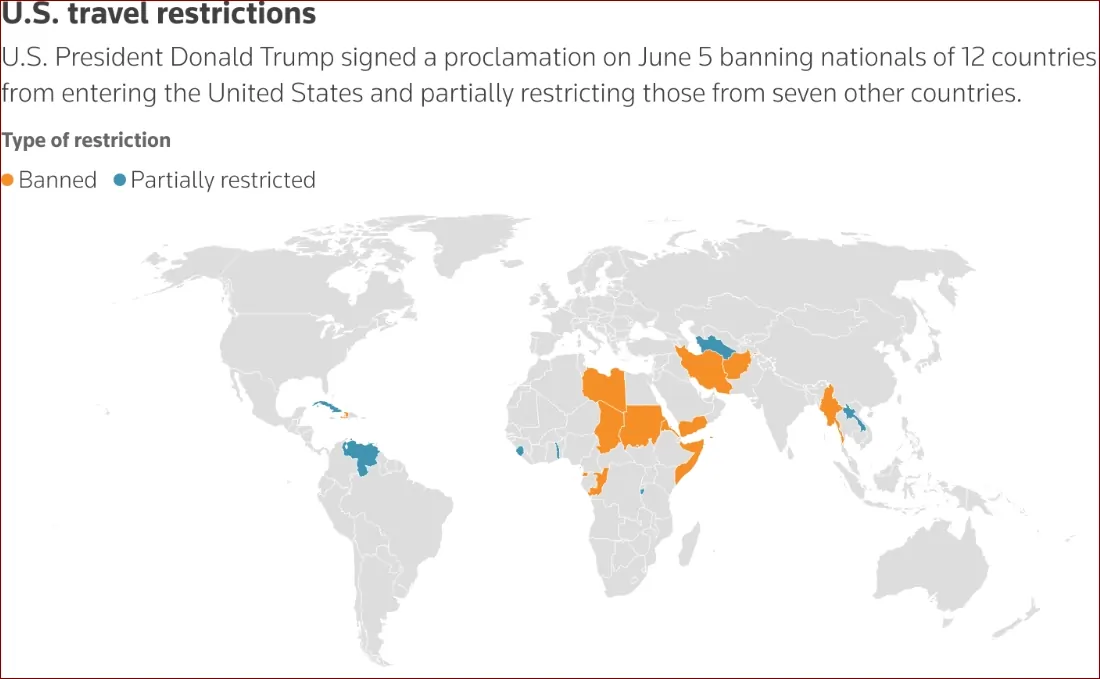
    new immigration bans for US 2025

    According to initial reports, the 12 countries included in the ban are:

    • Afghanistan
    • Myanmar
    • Chad
    • Republic of the Congo
    • Equatorial Guinea
    • Eritrea
    • Haiti
    • Iran
    • Libya
    • (Other countries may be part of the list, based on previous travel ban patterns, but these have been mentioned by major outlets so far. The full official list will be released soon.)

    Rationale Behind the Ban

    The Trump administration has justified the reinstatement of the travel ban on the grounds of national security, arguing that the targeted countries either suffer from significant instability or fail to adequately cooperate with US vetting and information-sharing protocols.

    According to early White House statements, these nations are deemed high-risk due to factors such as ongoing conflict, weak central governments, or insufficient background checks on travelers. By enacting this ban through executive order, the administration claims it is prioritizing the safety of Americans and strengthening border protections, citing both intelligence assessments and past precedents from Trump’s first term to legitimize the sweeping restrictions.

    Legal and Political Reactions

    • Domestic Debate: The ban has already triggered intense legal and political debate in the US. Civil rights groups and immigration advocacy organizations are preparing to challenge the executive action in court, questioning its constitutionality and calling it discriminatory.
    • International Reactions: Diplomatic responses from the blacklisted countries and international organizations are expected as the ban affects families, students, and businesses with cross-border ties.

    Potential Impacts

    1. Personal & Family Consequences

    The travel ban introduces significant emotional and logistical hardship for individuals and families from the affected countries. The sudden restrictions disrupt planned reunifications and add layers of stress and uncertainty for those with loved ones abroad.

    • Family separations become more common and long-lasting
    • Heightened anxiety and psychological distress among those impacted
    • Major disruptions to life plans, including education and career

    2. Educational & Economic Effects

    US universities, research centers, and industries may be hit hard by a loss of international students, academics, and skilled workers, all of whom contribute to vibrant campus life and economic productivity.

    • Fewer foreign students and scholars in US institutions
    • Potential loss of innovation and cross-cultural exchange
    • Decreased tuition revenue and local economic impact

    3. Social & Community Impacts

    Diaspora communities in the US could feel increasing fear and marginalization, leading to greater demand for legal, mental health, and social support services.

    • Growing insecurity among immigrant families
    • Increased need for advocacy and support groups
    • Rise in anti-immigrant sentiment or backlash

    4. Diplomatic & International Repercussions

    The new policy risks escalating diplomatic tensions, especially as affected nations and international organizations register formal objections or retaliate in kind.

    • Strained relations with targeted countries
    • Negative media coverage and reputation damage
    • Potential for reciprocal travel or visa restrictions against US citizens

    5. Legal & Political Fallout

    This executive order will spark a new wave of domestic legal battles and renewed debates over the limits of presidential authority in immigration.

    • Lawsuits from civil rights organizations and universities
    • Highly polarized political responses
    • Public protests and renewed focus on immigration law

    6. Long-Term Trends

    Over time, the US could lose its appeal as the top choice for international talent and students, as would-be immigrants look elsewhere for opportunity and stability.

    • More people choosing Canada, Europe, or Australia
    • Decline in the US’s global academic and talent leadership
    • Erosion of America’s image as a welcoming, diverse nation
    • Individuals and Families: Thousands of people—students, business professionals, families—are likely to be affected, either denied entry or left in uncertainty.
    • Diplomatic Relations: The move could strain US relations with not just the directly affected countries, but also with allies and multilateral organizations concerned about broad or arbitrary restrictions.
    • US Economy & Universities: American universities and industries dependent on foreign expertise and global exchange programs may face disruptions.

    Next Steps and What to Watch

    • Official Order Release: The full executive order text and a definitive list of affected countries are expected soon.
    • Legal Proceedings: Watch for the first legal challenges over the coming weeks.
    • Possible Revisions: The ban could see revisions as court challenges and political pressure evolve.

    How Trump Justified the Ban

    President Trump framed the renewed travel ban as a necessary response to growing national security concerns, emphasizing that several of the target countries—Iran included—either lack effective cooperation on security screening or pose significant security risks. He maintained that stronger border controls are vital for American safety.

    Key justifications in Trump’s statements:

    • National Security: Claim that unstable states could be sources of terrorism.
    • Inadequate Vetting: Some governments allegedly do not share credible background information.
    • Previous Precedents: Reference to earlier bans during Trump’s first term.
    • Ongoing Review: Indication that the list of banned countries could change based on future cooperation.

    Who Is Exempt from the Ban

    While the ban is sweeping, certain categories of people are not included; these exceptions are based on international law and practical necessities, though all entrants may face additional screening.

    Main exemptions:

    • Holders of US green cards (permanent residents)
    • Dual citizens travelling on a passport from a non-banned country
    • Accredited diplomats and staff of global organizations (e.g., UN)
    • Limited humanitarian or emergency cases (subject to extra scrutiny)
    • Asylum seekers already present in the US (case-by-case review)

    State Department Guidance

    The State Department moved quickly to inform both travelers and staff about the new restrictions, aiming for transparency but also stressing strict compliance. Travelers have been strongly advised against attempting entry until further notice.

    State Department directives:

    • Suspension of almost all visa processing for affected countries
    • Advance warning that valid visas do not guarantee US entry
    • Enhanced review for all pending humanitarian and emergency cases
    • No deportation risk for residents already in the US, but future renewals are threatened
    • Embassies and consulates updating their travel alert systems

    How the Ban Differs from 2017’s

    The 2025 ban builds on the controversial 2017 order, but it is broader and more systematic. It covers more countries, more visa types, and tries to avoid some legal loopholes that were challenged in courts last time.

    Notable differences from 2017:

    • 12 countries now included (previously 7)
    • Broader visa ban—includes more non-immigrant visas and student categories
    • Stricter exception and waiver process, with fewer case-by-case approvals
    • Framing: This ban is justified as an “intelligence-based review,” not just regional targeting
    • Tighter diplomatic and information-sharing requirements for future reviews

    Reactions to Trump’s Order

    The announcement led to immediate political, legal, and public responses within the US and internationally. Critics argue the ban revives divisiveness and discrimination, while supporters claim it is crucial for national defense.

    Prominent reactions:

    • Lawsuits and statements from US civil rights and immigrant advocacy groups
    • Outcry and warnings from affected countries’ governments, including Iran
    • Concerns from American universities over student and researcher losses
    • Protests and public demonstrations in multiple US cities
    • Political debate in Congress and calls for legislative intervention

    Consequences of New Ban Policies for Iranian Immigrants

    For Iranians, the latest restrictions disrupt family life, academic opportunity, and business relationships, fueling both frustration and new migration patterns. The ban intensifies a sense of exclusion for many who once viewed the US as an accessible option.

    Consequences for Iranians:

    • Stranded families and canceled reunification plans
    • Iranian students losing access to US universities and scholarships
    • Professionals unable to attend business events or start jobs
    • Increased anxiety and uncertainty, even for visa or green card holders
    • Surge in interest toward Canada, European countries, and Australia for migration and study

    What About Valid Visas?

    Even valid US visas now come with no guarantee of entry; many holders find themselves in a precarious legal gray zone. The State Department and border officials have broad authority to deny access without detailed explanation.

    For people with valid visas:

    • May be denied boarding by airlines or entry at US borders
    • Risk of visa revocation or cancellation without appeal
    • US residents likely to face hurdles during visa renewals or travel abroad
    • Need for constant attention to new State Department announcements

    What Options Do Immigrant Iranians Have Now?

    Given the deadlock with US entry, Iranians need to quickly assess workable alternatives for migration, studies, or family reunification. While options are limited, lawful and safer pathways do exist.

    Practical options now:

    • Apply to universities or jobs in Canada, Germany, France, Australia, or Turkey
    • Consider distance education or hybrid study programs in Europe and Asia
    • Explore legal paths for family reunification in other nations
    • Seek professional legal advice before attempting any high-risk “backdoor” routes
    • Monitor embassy and immigration news constantly for updates or waivers

    What Is the Future Perspective of the New Bans?

    There is broad uncertainty about how the situation will evolve, but activism and legal efforts mean the policy may not remain static. Both court outcomes and the political landscape could reshape the fate of the travel ban in coming years.

    Likely scenarios ahead:

    • Major legal challenges may overturn or modify the ban
    • Political change after US elections could bring revised or repealed policies
    • Ongoing unpredictability pushes globally mobile Iranians to diversify destinations
    • The US’s image as an open society may further erode among affected populations

    FAQs 

    1. What is the new US travel ban signed by President Trump in 2025?

    The new travel ban is an executive order signed by President Trump on June 4, 2025, which blocks citizens from 12 countries—including Iran, Afghanistan, Myanmar, Chad, and others—from entering the United States. The government claims this is a national security measure.

    2. Which countries are currently included in the 2025 travel ban?

    As of now, the named countries are Afghanistan, Myanmar, Chad, Republic of the Congo, Equatorial Guinea, Eritrea, Haiti, Iran, and Libya. The full, official list is expected to be published soon, and may include more countries.

    3. Why did President Trump justify this renewed ban?

    Trump and his administration argue that the ban is necessary for national security because some countries are seen as unstable or do not cooperate enough with US security screening or information-sharing measures.

    4. Who is exempt from the travel ban?

    Exemptions include US green card holders (permanent residents), dual citizens using passports from countries not on the banned list, accredited diplomats, officials of recognized international organizations, some urgent humanitarian cases, and certain asylum seekers already in the US.

    5. How does this 2025 travel ban differ from Trump’s 2017 ban?

    The 2025 ban covers more countries (12 versus 7 in 2017), includes a wider range of visa types, has stricter processes for exceptions, and is framed as being based on intelligence and diplomacy, not just geography or religion.

    6. What does the State Department say about traveling or applying for visas now?

    The State Department has suspended most US visa processing in the affected countries and warns that even valid, previously granted visas do not guarantee entry. Humanitarian cases will be considered more carefully, and all embassy and consulate pages are being updated accordingly.

    7. What happens if I have a valid US visa from one of the banned countries?

    Having a valid visa does not guarantee entry; airlines may deny you boarding, and US border officials can still refuse entry. Even current residents may face future challenges when renewing their status or visiting home.

    8. How are Iranian students, families, and professionals affected?

    Iranian families can be stranded or separated, students might lose out on educational opportunities, and professionals could miss jobs or events. The ban is likely to push more Iranians to look for study, work, or migration options in Canada, Europe, and Australia.

    9. Are there alternative options for Iranians affected by the ban?

    Yes, Iranians may seek admission to universities or companies in countries like Canada, Germany, Turkey, or Australia. Pursuing education online and seeking family reunification in third countries are also options. Caution is strongly advised for anyone considering unofficial routes.

    10. What could happen next with this travel ban policy?

    Legal challenges have already begun and could modify or overturn the ban. Upcoming US elections may also change the political environment. For now, significant uncertainty remains for those from the affected countries, including Iran.
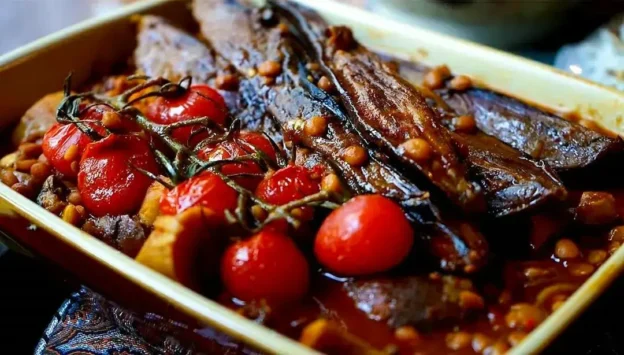
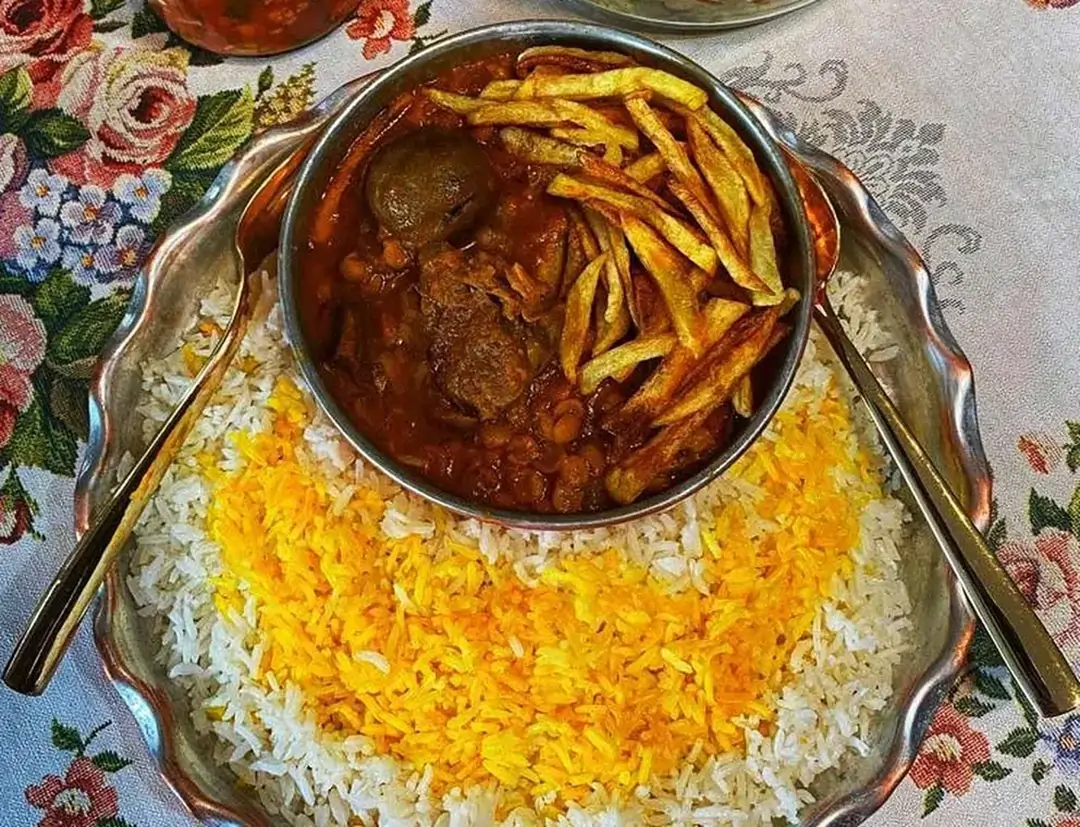
  • How to Cook Khoreshte Gheymeh

    If you’ve ever tasted Iranian cuisine, you know it’s a celebration of flavors, aromas, and centuries-old traditions. One of the dishes that regularly surprises and delights non-Iranians is Khoreshte Gheymeh Bademjan, or Persian Eggplant Stew. With its rich saffron-infused broth, tender chunks of lamb or beef, melt-in-your-mouth eggplants, and aromatic yellow split peas, Gheymeh Bademjan is a perfect ambassador for Persian hospitality and culinary artistry.

    Not only is this hearty stew a comforting main dish, but it also tells the story of Iran—the oldest country in the world—through its ingredients, flavors, and history. If you’re curious about popular Iranian dishes and have enjoyed Persian food in the past, here’s everything you need to know to bring this classic to your own kitchen.

    A Brief History of Khoreshte Gheymeh

    Khoreshte Gheymeh has long been part of Iranian home cooking, especially at gatherings and religious festivals. The word “Gheymeh” comes from the Persian word for “minced” or “cubed,” originally referring to the small pieces of meat prepared for this dish. Over time, cooks began to add yellow split peas, fragrant spices, dried Persian limes (limoo amani), and tomato, which give Gheymeh its bold, slightly tangy flavor.

    The addition of fried eggplants (bademjan) is a more modern touch but quickly turned Gheymeh Bademjan into a classic in its own right. Famous Iranian figures have praised this dish, and it remains a mainstay on festive tables throughout Iran, often served alongside crowd-pleasers like Ghorme sabzi recipe or Kabab Koobideh Persian style.

    Types of Gheymeh

    khoresh-gheymeh sibzamini

    The base of Gheymeh is incredibly versatile and has given rise to several types:

    • Gheymeh Bademjan: The classic version, featuring fried or roasted eggplants.
    • Gheymeh Sibzamini: Topped with crispy French fries instead of eggplants, especially popular with children.

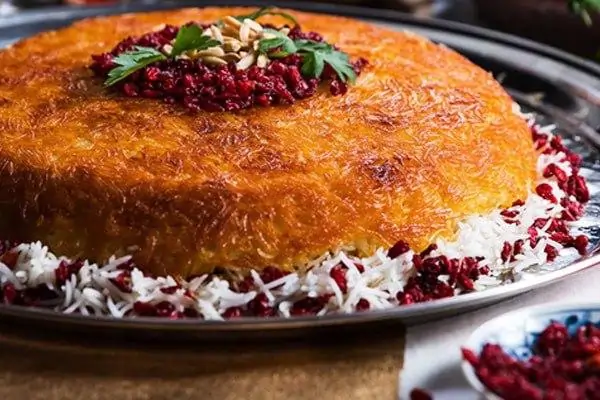
    No matter the type, this dish is often enjoyed with fluffy Persian rice and that coveted Persian crispy cake (Tahdig) at the bottom of the pot.

    Ingredients

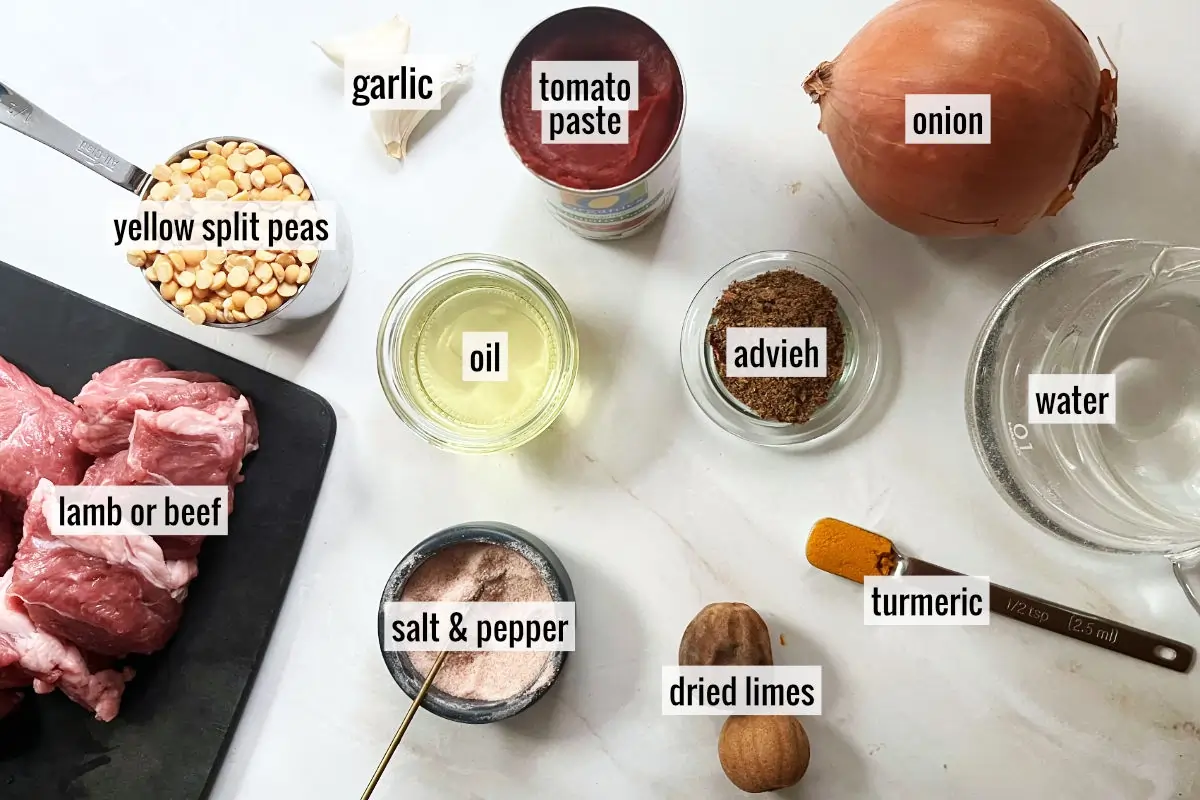
    Khoresh-Gheymeh-Ingredients

    • 400 grams lamb or beef, cut into cubes
    • 1 cup yellow split peas (sometimes labeled as Chana dal)
    • 1 large onion, finely chopped
    • 2-3 medium eggplants, peeled and sliced lengthwise
    • 2 medium tomatoes, chopped (or 2 tablespoons tomato paste)
    • 2-3 dried Persian limes (limoo amani; available at specialty stores)
    • 1 teaspoon turmeric
    • ½ teaspoon ground cinnamon
    • ¼ teaspoon black pepper
    • 1 teaspoon salt (add more to taste)
    • 3-4 tablespoons vegetable oil
    • 2 cups water or beef stock
    • Optional: A pinch of saffron dissolved in hot water

    How to Cook: Step by Step

    1. Prepare the Eggplants:

    Peel and slice the eggplants lengthwise, about 1 cm thick. Sprinkle them with salt to help draw out any bitterness, and let them rest for about 30 minutes. Rinse the slices and pat dry. Lightly fry the eggplant slices in hot oil until golden brown on both sides. Remove and place on paper towels to absorb excess oil.

    1. Cook the Split Peas:

    Rinse the yellow split peas and simmer them in water for about 10 to 15 minutes so they begin to soften. Drain and set aside. (They’ll finish cooking in the stew.)

    1. Make the Meat Base:

    In a large stew pot, heat 2 tablespoons of oil. Sauté the chopped onions until translucent and starting to brown. Add the cubed meat, and cook until the outside is browned. Sprinkle in the turmeric, cinnamon, and pepper, and stir to release their fragrance.

    1. Add Tomato and Split Peas:

    Stir in the chopped tomatoes or tomato paste. Cook until the tomatoes are soft, and the oil begins to separate. Add in the pre-cooked split peas, mixing everything together.

    1. Add Liquid and Limes:

    Pour in just enough water or beef stock to cover the mixture. Pierce the dried limes with a fork and add them to the pot. Sprinkle with salt and bring the entire stew to a gentle boil, then reduce the heat, cover, and simmer for about 40 minutes to let the flavors blend and the meat become tender.

    1. Add the Eggplants:

    Gently add the fried eggplant slices to the top of the stew. If using saffron, add it now for an extra aromatic touch. Try not to stir too much, so the eggplant can keep its texture. Cover and simmer for another 20–30 minutes.

    1. Serve:

    Khoreshte Gheymeh Bademjan is ready to serve when the stew is thick, the oil has risen to the top, and the eggplant is meltingly tender. Spoon it over a bed of steamed Persian rice, ideally with crispy Tahdig!

    What to Serve Beside Khoreshte Gheymeh

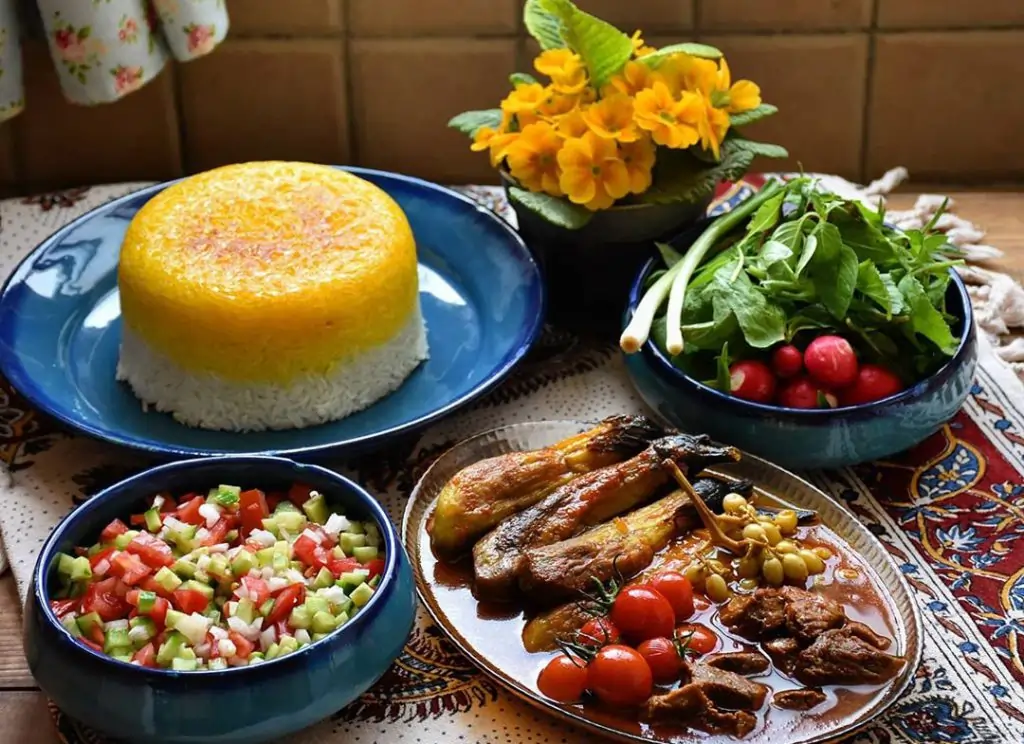
    Khoresh-Bademjan

    Traditionally, this stew is enjoyed with Persian-style steamed basmati rice, and almost always with Persian crispy cake (Tahdig)—the golden, crisp bottom crust of the rice pot. You can also serve it alongside fresh herbs (sabzi khordan), yogurt, pickled vegetables (torshi), or a refreshing cucumber and tomato Shirazi salad. It pairs beautifully with other popular Iranian dishes at any family gathering.

    Nutrition Facts (Per Serving)

    Nutrient

    Value

    Calories

    385 kcal

    Protein

    23 g

    Fat

    16 g

    Carbohydrates

    31 g

    Fiber

    8 g

    Sodium

    510 mg

    Cholesterol

    50 mg

    Iron

    3 mg

    These numbers are estimates. For a lighter dish, roast rather than fry the eggplants and use lean meat or a meatless substitute.

    Special Mom Tips for Richer Khoreshte Gheymeh

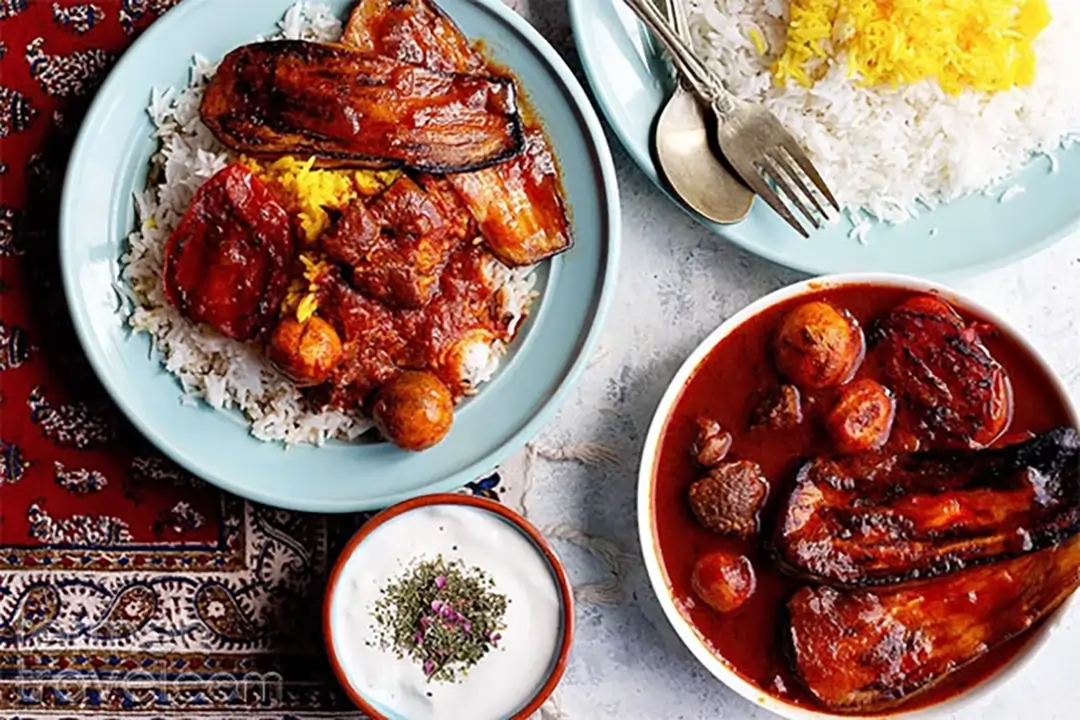
    Bademjoon khoresht

    • Use some bone-in meat for extra flavor, removing bones before serving.
    • Sauté the tomato paste until it’s a shade darker—this deepens the stew’s taste and gives a beautiful color.
    • Always use dried Persian limes and prick them with a fork, so their tangy flavor diffuses in the stew.
    • Layer the fried eggplant on top instead of mixing it in, which keeps it silky but intact.
    • Let your stew rest and reheat it before serving—like many Persian dishes, it tastes even better the next day as the flavors combine!

    Finally

    From the time of ancient Persian courts to today’s family kitchens, Khoreshte Gheymeh Bademjan showcases the heart of Iran’s culinary tradition. Whether you’re a new fan of Persian food or a regular at favorite Iranian restaurants, learning to cook this dish is a delicious way to connect with the vibrant culture of the oldest country in the world. Try it once, and it might just become the new favorite among your most beloved home-cooked meals!

    Frequently Asked Questions

    1. Can I make Khoreshte Gheymeh Bademjan vegetarian?

    Yes. Simply swap the meat for mushrooms, tofu, or another plant-based protein, and use vegetable stock.

    1. I can’t find dried Persian limes. What can I use instead?

    If you’re unable to find limoo amani, a squeeze of lemon juice or a little dried lime powder can add sourness, but limoo amani is essential for the authentic flavor.

    1. How far in advance can I make this stew?

    Khoreshte Gheymeh Bademjan keeps very well refrigerated for up to three days. It often tastes even better the next day!

    1. What kind of rice should I serve with it?

    Traditional Persian rice (steamed basmati) is best—don’t miss out on the Tahdig for a true Persian experience.

    1. Is this dish spicy?

    No, it’s aromatic and tangy but not hot. You can add a pinch of chili if you want a little heat.


  • راه‌ اندازی کسب‌ وکار بعد از مهاجرت

    برای بسیاری از ایرانیان موفق که سال‌ها برای کسب و کار خود زحمت کشیده‌اند تا در کشور خود جایگاه و اعتباری بسازند، تصمیم به مهاجرت، نه‌تنها یک جابجایی جغرافیایی، بلکه عبور از یک مرز پرپیچ‌وخم ذهنی و احساسی است؛ اگر شما هم صاحب کسب‌وکاری موفق در ایران بودید یا هستید و حالا در آستانه ورود به سرزمینی تازه با قانونی متفاوت، زبانی جدید، فرهنگی نا‌آشنا و بازاری ناشناخته قرار دارید، باید بگوییم واقعیت این است که راه‌اندازی کسب‌وکار بعد از مهاجرت، با ایران متفاوت است. 

     بسیاری از تصورات مربوط به موفقیت سریع یا انتقال راحت اعتبار کسب‌وکار، به دلیل تفاوت در فرهنگ بازار، ساختار اقتصادی و قوانین محقق نمی‌شود، اما اگر عمیق، با برنامه، منظم و با نگاه واقع‌گرایانه عمل کنید، می‌توانید نه‌تنها بقا، بلکه رشد را تجربه کنید. پس از مطالعه این مقاله از آب هویج بار فکریتان کم می شود.

    اهمیت راه‌ اندازی دوباره کسب‌ وکار پس از مهاجرت

    مهاجرت برای ایرانیان حرفه‌ای و کارآفرین، اغلب با دوگانگی بزرگی همراه است؛ از یک سو آرزوی پیشرفت، امنیت و فرصت‌های تازه و از سوی دیگر، ترس از شکست، از دست رفتن مناسبات و شروعی از نو؛ ولی چرا راه‌اندازی کسب‌وکار جدید بعد از مهاجرت آنقدر مهم است؟

    هویت شغلی و فردی: برای بسیاری از کارآفرینان، شغل تنها منبع درآمد نیست؛ بخشی از هویت اجتماعی و عزت نفس است. نبود فعالیت حرفه‌ای مناسب در کشور مقصد، به سرعت منجر به بحران هویتی، کاهش عزت نفس و حتی اختلالات روانی می‌شود.

    استقلال مالی: گرچه یافتن کار کارمندی ساده‌تر به نظر می‌رسد، اما کسب‌وکار شخصی پایداری مالی و آزادی عمل بیشتری را ارائه می‌کند و شما را از چرخه‌های شغلی معمول خارج می‌سازد.

    فرصت‌های رشد و توسعه شخصی: بازار کشورهای مقصد، اغلب وسیع‌تر و فرصت‌محورتر است. با ورود دانش، تجربه و زاویه نگاه ایرانی، می‌توانید ارزش افزوده‌ای منحصربه‌فرد ایجاد کنید.

    الگوسازی و حمایت از جامعه ایرانی مهاجر: راه‌اندازی کسب‌وکار موفق توسط ایرانیان، نه تنها جایگاه شخصی، بلکه عزت و اعتبار جامعه ایرانی را در آن کشور ارتقاء می‌دهد.

    موانع و چالش‌های جدی در راه‌اندازی کسب‌ وکار پس از مهاجرت

    business reopening challenges

    راه‌اندازی کسب‌وکار پس از مهاجرت، با موانع و چالش‌هایی جدی همراه است که فراتر از تفاوت قوانین و ساختار اقتصادی کشور مقصد مطرح می‌شود. عدم شناخت عمیق بازار جدید، پیچیدگی‌های زبان و فرهنگ کاری، ضعف در ساخت اعتبار حرفه‌ای، دشواری‌های تامین سرمایه و مواجهه با نظام حقوقی و مالیاتی ناآشنا، تنها بخشی از موانع پیش‌رو هستند.

    علاوه بر این‌ها، شوک فرهنگی، تنهایی و از دست دادن شبکه حمایت اجتماعی نیز می‌تواند روند تطبیق و رشد حرفه‌ای را برای مهاجران دشوارتر کند؛ به همین دلیل عبور موفقیت‌آمیز از این چالش‌ها، نیازمند برنامه‌ریزی دقیق، یادگیری مداوم و استفاده از تجربیات شبکه‌های تخصصی و مشاوران بومی است.

    در ادامه، اصلی‌ترین موانع و چالش‌هایی که اکثر ایرانیان کارآفرین با آنها مواجه می‌شوند را با جزئیات و راهکارهای عملی بررسی می‌کنیم:

    عدم شناخت دقیق بازار مقصد

    بازار هر کشوری، قواعد خاص خودش را دارد؛ عادات خرید، نوع تبلیغات موثر، انتظارات مشتری و رفتار رقبا متفاوت است. به‌عنوان مثال، مشتریان آلمانی یا کانادایی به شفافیت خدمات، پاسخگویی سریع و تضامین حقوقی حساسیت دارند؛ در حالی که شاید ایرانی‌ها راحت‌تر با کسب‌وکار مردمی و سنتی ارتباط بگیرند.

    برای این که دچار اشتباه اکوسیستم‌های جدید نشوید، باید شناخت بازار مقصد را فراتر از جست‌وجوی گوگل یا خواندن چند مقاله سطحی پیش ببرید. شما باید خود را به‌طور فعال در فضای اقتصادی کشور دخیل کنید. برای شروع، پیشنهاد می‌شود هفته‌ها زمان صرف حضور در رویدادهای صنعتی، نمایشگاه‌های تخصصی و همایش‌های مرتبط با حوزه مورد علاقه‌تان کنید. هدف، آشنایی مستقیم و بی‌واسطه با مشتریان، رقبا و روش‌های ارائه خدمات یا محصولات است.

    در کنار این، با عضویت در انجمن‌های تخصصی، چه ایرانی و چه بین‌المللی، می‌توانید از تجربه دیگر مهاجران که سال‌ها قبل همین مسیر را رفته‌اند، استفاده عملی ببرید. فراموش نکنید: بهترین اطلاعات، معمولاً از هم‌صحبتی با فعالان واقعی بازار و نه صرفاً منابع آنلاین به دست می‌آید.

    اگر هنوز تصویر روشنی از شرایط بازار ندارید، سعی کنید برای مدت کوتاهی به عنوان کارمند یا مشاور در یک کسب‌وکار محلی مشغول شوید تا درک دست‌اولی از سازوکار واقعی بازار به دست آورید. تحلیل رقبا، بررسی قیمت‌گذاری‌ها، مطالعه نظر مشتریان در شبکه‌های اجتماعی و سایت‌های نقد و بررسی نیز نتایج واقع‌بینی به شما خواهد داد.

    ۲. مشکلات زبان و فرهنگ کاری

    مهارت زبانی کافی، فقط برای ارتباط رومزه کافی نیست؛ در مذاکرات تجاری، مکاتبات رسمی، قراردادها، بازاریابی و حتی استخدام امری کلیدی است. بسیاری از ایرانیان موفق حتی سال‌ها پس از مهاجرت، به دلیل ناآشنایی با زبان و ظرایف فرهنگی، از ورود جدی به بازار عقب می‌مانند. میتوانید از راه کارهای ما در یادگیری زبان در سریع ترین زمان بهره ببرید.

    شاید تصور کنید گذراندن چند دوره زبان عمومی تمام مشکل را حل می‌کند. اما در واقعیت، شما نیاز به تسلط بر زبان کاربردی و اصطلاحات فنی و حقوقی بازار دارید. برای این منظور، ثبت‌نام در کلاس‌های تخصصی زبان بیزینسی (Business English/German/French…) در همان شهر یا کشور مقصد بسیار مهم است؛ اما کافی نیست.

    در کنار کلاس، خود را به حضور پیوسته در گردهمایی‌ها، رویدادهای نتورکینگ، و حتی کار داوطلبانه در محیط‌های بومی عادت دهید. با این کار عملاً می‌آموزید چه نوع ادبیاتی در قراردادها رایج است، در جلسات کاری چطور رفتار می‌کنند، چه نکته‌ای باعث جلب اعتماد یا سوءتفاهم می‌شود و چگونه ارتباط رسمی و غیررسمی شکل می‌گیرد.

    اگر ابتدای راه هستید و اعتمادبه‌نفس زبانی ندارید، استخدام موقت یک مترجم حرفه‌ای یا بهره‌گیری از مشاور محلی حین ملاقات‌ها و جلسات مهم نه تنها از خطای حقوقی جلوگیری می‌کند بلکه باعث می‌شود کم‌کم با فرایند بیزینس محلی آشنا شوید، تا آرام آرام این نقش را خودتان ایفا کنید.

    ۳. نبود بستر اعتباری قبلی

    cultural shock

    در کشور مقصد، هیچ‌کس شما را نمی‌شناسد و رزومه یا اعتبار گذشته در ایران، راهی به قلب بازار جدید ندارد؛ بانک‌ها به شما وام نمی‌دهند و مشتریان به‌راحتی اعتماد نمی‌کنند؛ مخصوصاً در مشاغل خدماتی یا فریلنسری. در کشور مقصد، معمولاً موفقیت‌های پیشین ایران برای بازار بومی گواهی کافی نیست.

    بهتر است پروفایل حرفه‌ای خود را دقیقاً مطابق استانداردهای کشور مقصد تدوین کنید. گام اول، آماده‌سازی رزومه و نمونه‌کارها به زبان کشور مقصد و با قالب بومی (مثلاً قالب رزومه کانادایی یا آلمانی) است. اگر مدرک و تجربه‌ای دارید، حتماً ترجمه رسمی و تأییدشده بگیرید و آن را در شبکه‌های حرفه‌ای مثل LinkedIn با شرح کامل بارگذاری کنید.

    برای جلب اولین اعتمادها، توصیه می‌شود وارد پروژه‌های کوتاه فریلنسری (مانند Upwork، Fiverr یا سایت‌های بومی مثل Freelancer) شده و حتی با دستمزد کمتر در ابتدا کاری بگیرید تا اولین ریویو و ریت مثبت نصیب شما شود. این امتیازات را به آرامی به مشتریان بزرگ‌تر و بومی عرضه کنید تا زنجیره اعتبارتان شکل گیرد. در ادامه، با شرکت در دوره‌های محلی یا کسب گواهی‌نامه‌های حرفه‌ای، اعتبارتان را تقویت کنید. این مدارک (حتی دوره‌های کوتاه‌مدت یک‌هفته‌ای) نه‌تنها به پروفایل شما رسمیت و اعتبار می‌دهد، بلکه باعث آشنایی و شبکه‌سازی با فعالان آن حوزه نیز خواهد شد.

    ۴. مسائل مالی، حقوقی و اداری

    یکی از مهم‌ترین و پیچیده‌ترین چالش‌ها، مسائل قانونی و مالیاتی است؛ از مشکلات راه اندازی حساب برای ایرانی ها، تا راه‌اندازی یک کسب‌وکار بدون دانستن مقررات ثبت شرکت، مجوز، بیمه‌های اجباری، گونه‌های مالیاتی و جرایم مرتبط، می‌تواند به سرعت به ضررهای بزرگ یا حتی مصادره سرمایه منجر شود.

    تقریباً خطرناک‌ترین اشتباه، اقدام بدون مشورت با حسابدار و وکیل آشنا به شرایط مهاجران است. پیش از هرگونه ثبت شرکت، امضای اجاره‌نامه، یا بستن قرارداد، باید با یک مشاور حقوقی و یک حسابدار باسابقه در همان کشور جلسه بگذارید تا تمامی مراحل قانونی ثبت کسب‌وکار، انواع مجوزهای مورد نیاز، بیمه‌ها و خطرات مالیاتی را برای شما شخصی‌سازی کند.

    برای کاهش هزینه، بسیاری کشورها دوره‌های رایگان یا حمایتی برای تازه‌واردان ارائه می‌کنند که شما را مرحله به مرحله با قوانین بنیادین بازار، ثبت شرکت، مالیات و حسابداری آشنا می‌کنند. این دوره‌ها علاوه بر آشنایی با قوانین رسمی، شما را با اصطلاحات تخصصی و روند عملی کار نیز آشنا می‌کند.

    در طول فعالیت، همواره خود را به منابع رسمی (وب‌سایت دولت، ادارات مالیاتی، مؤسسات حقوقی معتبر) ارجاع دهید و اخبار و قوانین جدید را دنبال کنید. اگر فعالیت شما به حوزه‌های حساس مثل غذا، سلامت، مالی یا کودک مربوط می‌شود، تهیه‌ی بیمه تخصصی و مجوزهای خاص را به‌هیچ‌وجه به تعویق نیندازید.

    ۵. مساله سرمایه اولیه و تامین مالی

    هزینه ثبت شرکت، اجاره مکان، تبلیغات اولیه و جذب نیرو در اروپا، کانادا یا استرالیا به مراتب بالاتر از ایران است. بیشتر مهاجران، ذخیره ریالی خود را طی جابجایی تا حد زیادی خرج کرده‌اند و برای شروع مجدد به سرمایه قابل توجه نیاز دارند. شروع کسب‌وکار در کشور جدید را نباید مانند ایران با امید فروش سریع یا سود آنی برنامه‌ریزی کنید. راه‌حل مؤثر این است که ابتدا مدل کسب‌وکار را در مقیاس کوچک، حتی از خانه یا آنلاین راه‌اندازی کنید، هزینه‌ها را جزءبه‌جزء یادداشت کرده و درآمد را واقع‌بینانه برآورد نمایید.

    تا زمانی که بازار مشخص نشده و مشتری پیدا نکرده‌اید، سمت دفتر و مخارج بالای بازاریابی یا نیروی انسانی نروید. تمرکزتان را بر فروش مستقیم، تولید محتوای آنلاین (مثلاً سایت و اینستاگرام)، و سرویس‌دهی به بازار محلی و مهاجران بگذارید.

    هم‌زمان با توسعه، به سراغ بانک‌ها و نهادهای دولتی بروید و درباره گرنت‌ها و وام‌های ویژه مهاجران پرس‌وجو کنید. برای این منظور، داشتن بیزینس‌پلن دقیق، مدرک اقامت و ارائه مدل درآمدی قابل سند، شانس دریافت وام یا حمایت مالی را چندبرابر می‌کند. اگر به یک شریک بومی مطمئن دسترسی دارید، شراکت هم ابزاری برای تقسیم هزینه و هم نفوذ سریع‌تر به بازار است؛ اما بدون قرارداد حقوقی روشن وارد هیچ همکاری نشوید.

    ۶. دشواری‌های روحی، شوک فرهنگی و تنهایی

    مواجهه با تنهایی و فقدان حمایت خانوادگی و ارتباطات کاری قبلی، در کنار شوک فرهنگی و اضطراب ناشی از عدم موفقیت سریع می‌تواند باعث افت بهره‌وری، بی‌انگیزگی و حتی افسردگی شود. مهم است بدانید که شوک مهاجرت و از دست دادن شبکه حمایت اجتماعی ایران معمولاً باعث افت انگیزه و بهره‌وری می‌شود. برای مدیریت این وضعیت، توصیه می‌شود حضور فعال در انجمن‌ها و گروه‌های ایرانیان مقیم و شرکت در رویدادها یا فعالیت‌های داوطلبانه را جدی بگیرید.

    این فضاها علاوه بر کمک عاطفی، شما را در جریان تجربیات و راهکارهای دیگران قرار می‌دهد. سعی کنید خانواده را از ابتدا در جریان تصمیمات کاری و شرایط جدید بگذارید. گفتگو با اعضا و توجه به دغدغه‌های عاطفی و اجتماعی فرزندان و همسر، جلوی شکل‌گیری کدورت یا انزوا را می‌گیرد.

    دیدن مشاور یا روان‌شناس مهاجر، به‌ویژه در ماه‌های اول، کمک می‌کند تا چالش‌ها را طبیعی دانسته و راهکارهای عملی مقابله با آن را دریافت نمایید. پذیرش تدریجی تغییر و تشویق خود به انطباق، بخش مهمی از مسیر مهاجرت و موفقیت شغلی است.

    مزایا و فرصت‌های طلایی راه‌اندازی کسب‌وکار در کشور جدید

    canada-waving flag

    کمک به رشد جامعه ایرانی و الگوسازی: کسب‌وکار موفق شما الهام‌بخش سایر مهاجران و موجب ارتقای تصویر اجتماعی ایرانیان می‌شود، ضمن اینکه امکان استخدام، همکاری و کمک متقابل با جامعه ایرانی را نیز فراهم می‌کند.

    دسترسی به بازار بزرگ‌تر و چندملیتی: در کشورهای پیشرفته، با یک محصول یا خدمت، می‌توان به بازار چندمیلیونی دست یافت و خدمات را حتی به شکل آنلاین به چند کشور عرضه کرد.

    امکانات و حمایت‌های مخصوص مهاجران: دولت‌ها معمولاً پلتفرم‌های آموزش کارآفرینی، مشاوره حقوقی رایگان، گرنت‌های مالی و حتی برنامه‌های ویژه برای سرمایه‌گذاری مهاجران دارند.

    فرصت تنوع‌بخشی و نوآوری: ترکیب تجربه ایرانی و شناخت نیازهای جامعه جدید، ایده‌ها و طرح‌هایی منحصربه‌فرد و قابل‌رقابت می‌سازد؛ چه در صنایع غذایی، خدمات فنی، یا حوزه‌های تخصصی.

    جدول اشتباهات رایج ایرانیان در راه‌اندازی بیزینس و راه‌حل پیشرفته‌تر

    اشتباه رایج

    تحلیل دقیق

    راه‌حل تخصصی

    شروع پر هزینه و بیدون پلن

    عدم شناخت هزینه‌های پنهان و واقعی کشور مقصد

    تدوین بیزینس‌پلن دقیق و گرفتن مشاوره مالی حرفه‌ای

    بی‌توجهی به قوانین و استانداردها

    تفاوت زیاد مقررات کار و مالیات

    تماس مستقیم با وکلای مهاجرت یا حسابداران متخصص بازار مقصد

    تمرکز صرف بر بازار ایرانیان مهاجر

    محدودیت ساخت مشتری و نادیده گرفتن پتانسیل بومی

    تحلیل مخاطب بازار بومی و تنظیم استراتژی تبلیغاتی متناسب

    اتکا به روش‌های بازاریابی سنتی

    ضعف دیده شدن در فضای دیجیتال و شبکه‌های اجتماعی

    آموزش دیجیتال مارکتینگ و حضور فعال در رسانه‌های اجتماعی

    نادیده گرفتن نیاز به صدور فاکتور و حسابداری دقیق

    دچار شدن به مشکلات قانونی و مالیاتی در آینده

    استفاده از نرم‌افزارها و خدمات حسابداری بومی


    جمع‌بندی

    نقطه شروع هر موفقیت، پذیرش واقعیت‌ها و نگاه بدون تعارف به چالش‌هاست. مهاجرت و کارآفرینی همزمان، تصمیمی جسورانه و پرریسک است اما با یادگیری، مشاوره تخصصی، شبکه‌سازی اصولی و گام‌های سنجیده، می‌توانید مسیر بقا و رشد را طی کنید. اصرار بیش از حد بر موفقیت یک‌شبه یا مقایسه پیوسته با شرایط کاری در ایران، فقط زمان و انرژی شما را هدر می‌دهد. شرایط جدید نیازمند دانش، انعطاف و صبر حرفه‌ایست.

    اگر واقعاً به موفقیت و کیفیت زندگی شغلی در مهاجرت اهمیت می‌دهید، باید خانواده و فرزندانتان را هم در فرآیند تطبیق و رشد قرار دهید. پیشنهاد جدی ما مطالعه مقالات مشکلات زوجین پس از مهاجرت و چالش‌های کودکان در مهاجرت است تا با مجهز شدن به آگاهی از تمام ابعاد مهاجرت، شانس موفقیت شما در تمام زمینه‌ها چند برابر شود.

    سوالات متداول درباره راه‌اندازی کسب‌وکار پس از مهاجرت

    ۱. آیا موفقیت در بازار جدید، مثل سابقه خوبم در ایران قابل تکرار است؟

    موفقیت قبلی کمک‌کننده است اما بازار جدید قواعد خودش را دارد؛ باید تطبیق پیدا کنید و از تجربه‌تان به شکل اصولی استفاده کنید.

    ۲. چطور بفهمم بازار کشور مقصد مناسب کسب‌وکار من هست یا نه؟

    قبل از هر اقدامی، بازار را حضوری بررسی کنید، با مشتری‌ها و همکاران تماس بگیرید و اطلاعات دقیق از منابع رسمی و فعالان آن حوزه بگیرید.

    ۳. مهاجرت بدون تسلط کافی به زبان چقدر ریسک دارد؟

    عدم تسلط به زبان بومی، یکی از موانع اصلی است. حتماً روی یادگیری زبان تخصصی وقت بگذارید و حداقل ابتدا از مترجم یا مشاور محلی استفاده کنید.

    ۴. آیا بانک وام به من مهاجر می‌دهد تا کسب‌وکارم را شروع کنم؟

    معمولاً تا زمانی که اعتبار مالی و مستندات کافی نداشته باشید و مدام در کشور مقصد زندگی نکرده باشید، دریافت وام مشکل است؛ اول کوچک شروع کنید.

    ۵. چطور اعتماد مشتریان بومی را جلب کنم؟

    رزومه و مدارک حرفه‌ای خود را ترجمه کنید، در سایت‌های تخصصی و شبکه‌های کاری بومی فعال باشید و با پروژه‌های کوچک شروع کنید تا کم‌کم اعتبار بسازید.

    ۶. ریسک مسائل حقوقی و مالیاتی چقدر جدی است؟

    بسیار جدی و متفاوت با ایران است. پیش از هر اقدامی با حسابدار و وکیل کارکشته همان کشور مشورت و همه مجوزها را اخذ کنید.

    ۷. اگر کسب‌وکارم شکست خورد، چه راهی دارم؟

    اجازه بدهید شکست تبدیل به تجربه شود؛ بازار را دوباره تحلیل کنید، شبکه‌سازی کنید و احتمالاً در زمینه‌ای جدید شانس دوباره‌ای داشته باشید.

    ۸. حضور در شبکه ایرانیان مقیم چقدر ضروری است؟

    ارتباط با جامعه ایرانی مهاجر هم از لحاظ روحی و هم اطلاعات کاربردی ضروری است و جلوی احساس تنهایی و ناآشنایی را می‌گیرد.

    ۹. چطور با تفاوت‌های فرهنگی و شوک محیط جدید کنار بیایم؟

    سعی کنید در برنامه‌های اجتماعی و گردهمایی‌ها شرکت کنید، مشاور یا روان‌شناس مهاجر ببینید و خانواده را در مسیر تطبیق شریک کنید.

    ۱۰. چقدر شانس گرفتن حمایت یا گرنت دولتی برای کسب‌وکار دارم؟

    اگر ایده یا طرح قابل اجرا و بیزینس‌پلن مناسب داشته باشید، بسیاری از کشورها برنامه حمایت و گرنت ویژه برای مهاجران دارند – تحقیق و اقدام را آغاز کنید.


  • How to make Joojeh Kabab( Persian Saffron chicken Kabab)

    There’s something truly special about gathering around a grill with your loved ones, the scent of marinated chicken sizzling in the air, and the vibrant colors of saffron glistening on golden kabobs. If you’ve ever wanted to explore the flavors of Persian cuisine, starting with Joojeh Kabab—saffron and yogurt chicken kabobs—is the perfect way in.

    This beloved dish isn’t just a meal; it’s a celebration of Iran’s ancient food tradition and hospitality, capturing the essence of one of the oldest countries in the world. Whether you’re already a fan of famous Iranian popular dishes like Kabab Koobideh and Fesenjan, or you’re just beginning your adventure, learning how to cook Joojeh Kabab at home is a delicious step into Persian culture. This guide will take you through every detail, from blooming saffron to grilling juicy skewers—no experience required!

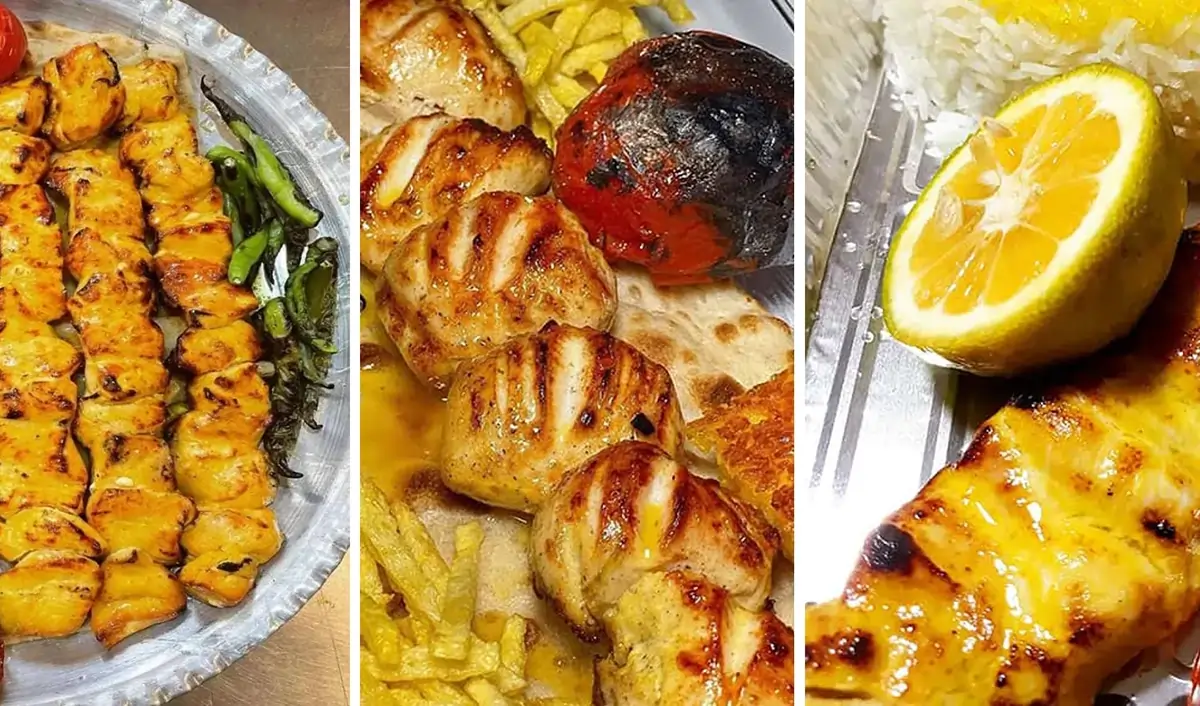
    Joojeh Kabab is a classic Persian dish made of tender chicken pieces marinated in saffron, yogurt, and citrus, then grilled to perfection and celebrated as one of Iran’s most beloved and flavorful kabobs.


    Ingredients for this Chicken Kabob Recipe

    Before we dive into the list of ingredients, it’s important to understand what makes Iranian cuisine so unique and beloved across the world. Iranian food is all about creating harmony between subtle fragrances, bright colors, and balanced flavors. Every ingredient in Joojeh Kabab is chosen to bring out natural aromas and textures—think fresh citrus, creamy yogurt, and, of course, the jeweled essence of saffron.

    These elements are not only common in Joojeh Kabab, but also in other Iranian popular dishes like Kabab Koobideh and Fesenjan, all of which speak to the deep culinary heritage of one of the oldest countries in the world. When you prepare this recipe, you’re not just making dinner—you’re bringing centuries of Persian hospitality and taste to your table.

    Before jumping in, let’s talk about what makes Joojeh Kabab so delicious. Each ingredient in this list plays a special role in creating those classic Persian flavors:

    Joojeh-Kabob-Ingredients

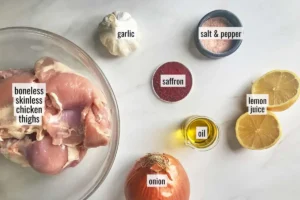
    • Chicken (1 kg / 2.2 lbs, boneless): You can use breast for tenderness or thighs for extra juiciness. Cutting the chicken into large chunks helps them stay moist and grill beautifully.
    • Onion (1 large, grated or sliced): Onion helps with both flavor and tenderizing the chicken.
    • Plain Yogurt (1/4 cup): This adds softness to the chicken and helps build a tasty marinade.
    • Olive Oil (3 tbsp): Adds a bit of healthy fat to lock in moisture and help infuse the marinade.
    • Lemon Juice (from 1 large lemon): Brings zing and balances flavors—marinating with acidic lemon is key to Persian kabobs.
    • Ground Saffron (1/2 tsp, bloomed): The main star! Saffron gives that iconic golden color and an unmistakable aroma, used in many dishes from the oldest country in the world.
    • Salt & Pepper (to taste): The essentials!
    • Optional: Garlic (2 cloves, minced) & Turmeric (1/2 tsp): For extra layers of flavor, often used in home recipes.

    Why all this? Each item is chosen to maximize both taste and tenderness. The combination is simple yet legendary in Iranian homes.

    How to Make Joojeh Kabab

    Cooking Joojeh Kabab at home is more than just following a recipe; it’s about embracing a piece of Iranian culture that values patience, attention to detail, and the art of marination. Persian cooking is famous for transforming everyday ingredients into dishes that taste both refined and comforting, using techniques that have been passed down in one of the oldest countries in the world. When it comes to making Joojeh Kabab, each step—from marinating in fragrant saffron and yogurt to grilling over hot coals—adds layers of flavor and tenderness that other cuisines might miss.

     Whether you’re already familiar with Iranian favorites like Kabab Koobideh or Fesenjan, or you’re exploring these classics for the first time, preparing Joojeh Kabab is a memorable way to capture the balance of tastes and textures that define Iranian popular dishes. Let’s walk through the process together, step by step, so you can create an authentic Persian feast in your own kitchen.

    Don’t worry—making Joojeh Kabab isn’t complicated, but it’s all about patience and layering flavor at every stage. Here’s a step-by-step rundown:

    Prepare the Marinade:

    Mix onion, yogurt, olive oil, lemon juice, bloomed saffron, salt and pepper in a bowl. If using, add garlic and turmeric now too.

    Marinate the Chicken:

    Add chicken pieces. Mix until everything’s nicely coated. Cover the bowl and let the mixture marinate for at least 3 hours (overnight gives even better flavor).

    Tip: The longer, the better!

    Skewering:

    Thread the marinated chicken onto skewers, making sure not to pack them too tightly. If you’re using wood skewers, soak them in water for 1 hour so they don’t burn.

    Grilling:

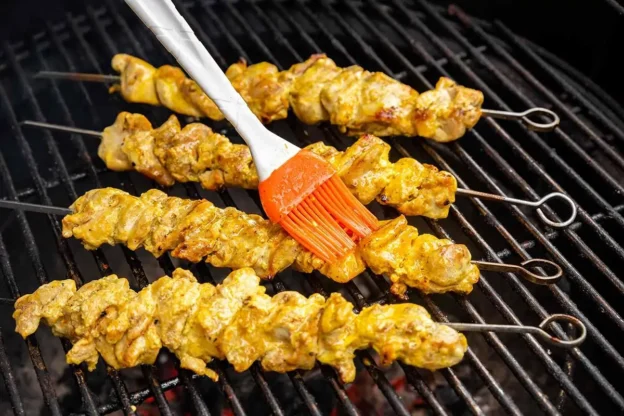
    Heat your grill or barbecue to medium-high. Cook skewers for about 10–15 minutes, turning every few minutes, until chicken is golden and slightly charred.

    Grilling this way brings out the smoky flavor typical to many Iranian dishes.

    Finish and Serve:

    Brush with a little melted butter or another splash of saffron water before serving, just like they do in Tehran’s authentic kabab houses.

    How to Bloom Saffron

    If you’ve ever wondered why Persian dishes like Joojeh Kabab, seem to glow with color and fragrance, the answer is almost always saffron. Known as the world’s most precious spice, saffron is used in many Iranian popular dishes to add both vibrant color and a subtle, luxurious aroma. But simply tossing saffron threads into a recipe won’t deliver the full experience!

    Instead, Iranians practice “blooming” saffron—a special technique that releases all the golden color and delicate flavor locked inside each tiny thread. Blooming is quick and easy, and mastering this step brings the true taste of one of the oldest cuisines in the world to your kitchen. Here’s how you can do it at home and elevate all your Persian recipes.

    Saffron is called red gold in Iran for a reason. Blooming (or steeping) saffron properly is a tradition for Iranian popular dishes—here’s how it’s done:

    • Grind it: Put saffron threads in a mortar and pestle; gently grind to a fine powder.
    • Add hot water: Pour in 2–3 tablespoons of hot (not boiling!) water.
    • Let it steep: Wait about 10–15 minutes. The color will turn vibrant yellow-orange.
    • Use it: This liquid is your secret weapon. Add it to the marinade and also brush it over the cooked kabob for extra aroma.

    Joojeh Kabab types

    jooje-kebab types

    One of the most exciting things about Joojeh Kabab—and really, about Iranian food as a whole—is how even the most classic dishes can take on new personalities depending on region, family tradition, or personal taste. While saffron, yogurt, and citrus are typically at the heart of every good Joojeh Kabab, cooks across one of the oldest countries in the world have always experimented with different marinades, grilling techniques, and even presentation styles.

    Some regions add pomegranate juice or sumac for brightness, others use bone-in chicken for extra juiciness, and there are even vegetarian or oven-baked versions gaining popularity outside Iran. Like Kabab Koobideh or Fesenjan, Joojeh Kabab can easily be adapted for special diets and modern kitchens—all while retaining those signature Persian flavors and aromas. Let’s take a look at some of the most popular variations you might want to try at home.

    Joojeh Kabab is flexible—over generations in the oldest country in the world, families have added their own twists. Here are a few you can try:

    • With Vegetables: Alternate pieces of chicken with bell peppers, tomatoes, or onions on each skewer for color and flavor.
    • Bone-in Chicken: Using bone-in pieces tastes richer and juicier, but add a few extra minutes on the grill.
    • Extra Saffron or Spices: Add more saffron or even a pinch of cardamom for a luxury version.
    • Mix with Kabab Koobideh: Serve your chicken kabobs next to ground meat kababs for a truly Iranian BBQ experience.
    • Butter Basting: Brushing the kabobs with melted butter as they grill makes them even more tempting.

    Experimentation is at the heart of Persian cooking!

    Equipment for cooking Joojeh Kabab

    You don’t need fancy tools to cook authentic Joojeh Kabab, but a few key pieces of equipment will help you get the best results. Most Iranians use metal skewers (known as “sikh”) for grilling, which hold the marinated chicken pieces firmly over the flame and help with even cooking.

    A charcoal or gas grill is ideal to achieve that classic smoky flavor, but you can also use an oven broiler or even a stovetop grill pan if that’s what you have. Don’t forget a large bowl for mixing the marinade and some tongs for turning the kabobs—simple kitchen equipment, but essential for capturing the real taste of this Persian favorite.

    You don’t need a fancy setup to prepare Joojeh Kabab, just a few basic tools:

    • Skewers: Either metal (traditional) or wooden.
    • Grill/Barbecue: Charcoal or gas both work great, or use your oven broiler.
    • Mixing Bowls: For marinating.
    • Mortar and Pestle: To grind saffron (or use a spice grinder).
    • Basting Brush: For butter or saffron at the end.

    Nutrition Facts Table

    Knowing what you eat matters! Here’s a nutrition snapshot for a typical serving of Joojeh Kabab (not including rice or bread):

    Nutrient

    Amount per Serving

    Calories

    260 kcal

    Protein

    26 g

    Fat

    14 g

    Carbs

    4 g

    Fiber

    0.5 g

    Sodium

    290 mg

    Cholesterol

    80 mg

    This makes Joojeh Kabab a healthy, high-protein meal, especially when compared with some other Iranian popular dishes like Fesenjan.

    What to Serve with Joojeh Kabab

    what to serve with joojeh kabab

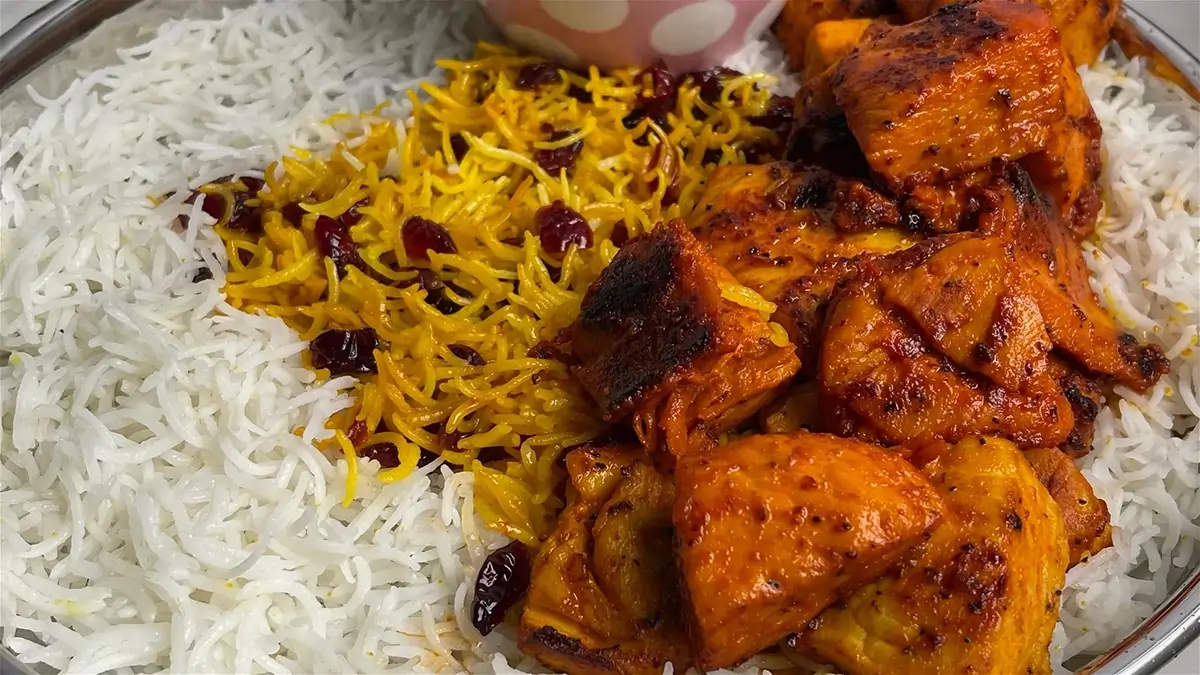
    Serving Joojeh Kabab isn’t just about the grilled chicken itself—it’s about creating a well-balanced Persian meal that highlights both flavor and tradition. In Iran, Joojeh Kabab is rarely served alone. It’s typically accompanied by fluffy saffron rice (chelo), grilled tomatoes, and a symphony of fresh herbs (sabzi khordan) for a truly authentic experience. Alongside, you might also find soft lavash or sangak bread, tangy pickled vegetables (torshi), and creamy yogurt.

    These sides add color, texture, and the famous balance of tastes that’s at the heart of Iranian cuisine, making your Joojeh Kabab meal feel like a celebration—just as it does in homes across one of the oldest countries in the world.

    In Iran, a meal is never just one dish. The sides and extras complete the experience and show why Persian hospitality is famous:

    • Persian Rice (Chelo): Fluffy, aromatic rice is the classic base for kabobs. For a treat, make “tahdig” (the crispy bottom layer).
    • Grilled Tomatoes and Green Peppers: Grill veggies alongside the chicken for extra color and smoky flavor.
    • Fresh Herbs (“Sabzi Khordan”): Basil, mint, tarragon, and parsley add freshness and cleanse the palate.
    • Yogurt Dip (Mast-o-Khiar): A cool dip with cucumber and mint keeps the meal refreshing.
    • Flatbreads: Serve with sangak or lavash, classic breads from the region.
    • Sumac: This tangy spice is sprinkled on kabobs right before eating—don’t skip it!
    • Mix and Match: Pair Joojeh Kabab with Kabab Koobideh or a serving of Fesenjan to explore the wide range of Iran’s most popular dishes.

    In conclusion…

    Making Joojeh Kabab at home is more than simply preparing a meal—it’s a chance to experience the warmth, flavors, and centuries-old traditions of Iranian cuisine right in your own kitchen. This beloved Persian dish, with its tender saffron- and yogurt-marinated chicken, invites you to savor every bite and share meaningful moments with friends or family, just as Iranians do around their tables.

    By learning the secrets of marination, blooming saffron, and grilling, you’re not just following a recipe—you’re welcoming the spirit of hospitality and cultural richness from the oldest countries in the world into your life. Whether you’re new to Persian food or a long-time fan of dishes like Kabab Koobideh and Fesenjan, Joojeh Kabab is a delicious way to begin, bringing people together and creating lasting, flavorful memories.

    FAQs

    1. Is Joojeh Kabab the same as Kabab Koobideh?

    No, Joojeh Kabab uses marinated chicken pieces, while Kabab Koobideh is made with seasoned ground meat, usually lamb or beef.

    1. Why does everyone talk about saffron in Persian cooking?

    Saffron is key in many famous dishes from one of the oldest countries in the world, giving food its beautiful color and unique aroma.

    1. Can I cook Joojeh Kabab in the oven if I don’t have a grill?

    Yes! Use your oven’s broiler or a grill pan for great results.

    1. Is Joojeh Kabab spicy?

    Not at all—its flavor comes from saffron, lemon, and onion, not hot chilies.

    1. What other Iranian popular dishes should I try?

    Definitely try Fesenjan, Ghormeh Sabzi, and Kabab Koobideh to explore the diversity of Persian cuisine.

    1. Can I make Joojeh Kabab ahead of time?

    Yes, you can marinate it a day ahead. Grill just before serving for the freshest taste!


  • 8 Persian deserts you don’t want to miss

    Iranian cuisine, deeply rooted in the traditions of one of the oldest countries in the world, is celebrated for its vibrant flavors, aromatic spices, and artful presentation. While savory dishes like Kabab Koobideh (grilled minced meat kebabs) and Ghorme Sabzi (herb and meat stew) often steal the spotlight, Persian desserts are an equally integral part of Iranian culture, offering a sensory experience that reflects the nation’s heritage, hospitality, and creativity.

    These sweets, infused with poetic elegance and historical significance, showcase the ingenuity of Iranian famous figures like chefs, poets, and artisans who have shaped the country’s culinary legacy. In this comprehensive exploration, we’ll dive into the history, ingredients, regional variations, cultural significance, and modern adaptations of Persian desserts, weaving in the essence of Iranian cuisine and the enduring spirit of one of the oldest countries in the world.

    A Historical Sweet Journey Rooted in Iranian Culture

    Iran’s culinary traditions trace back to the Achaemenid Empire (550–330 BCE), a period when Persia was a global hub along the Silk Road. This strategic position facilitated the exchange of ingredients like saffron, pistachios, and rosewater, which became cornerstones of Iranian cuisine.

    Persian desserts, were born from this rich cultural tapestry, blending local abundance with influences from India, China, and the Mediterranean. Iranian culture revered food as an art form, with sweets playing a central role in Zoroastrian rituals, seasonal festivals like Nowruz (Persian New Year), and royal banquets during the Safavid dynasty (1501–1736).

    Iranian famous figures like the poet Rumi, whose verses often drew parallels between food and spiritual nourishment, and medieval scholars like Avicenna, who documented the medicinal properties of ingredients like saffron, indirectly shaped the evolution of Persian desserts.

    These sweets were not just indulgences but symbols of abundance, joy, and community, served during celebrations, weddings, and even memorials. Today, they remain a testament to Iran’s enduring legacy as one of the oldest countries in the world, preserving recipes that have delighted palates for millennia.

    The Essence of Persian Desserts: Ingredients and Philosophy

    The philosophy of Iranian cuisine, including its desserts, emphasizes balance—flavors that harmonize without overwhelming, textures that contrast, and presentations that reflect the aesthetic sensibilities of Iranian culture. Persian desserts combine sweet, tart, and aromatic elements. Key ingredients include:

    • Saffron: Known as “red gold,” this spice, harvested in Iran’s Khorasan region, imparts a golden hue and earthy flavor, used in desserts.
    • Rosewater and Orange Blossom Water: Floral essences that evoke Persian gardens, adding a poetic touch to sweets.
    • Nuts: Pistachios, almonds, and walnuts provide crunch and richness, often ground or slivered, mirroring their use in savory Iranian dishes.
    • Spices: Cardamom and cinnamon add warmth
    • Sweeteners: Honey and sugar syrups, often infused with aromatics, create a glossy finish, akin to the glazes used in some Persian rice dishes.
    • Flours: Rice flour, chickpea flour, and wheat flour form delicate bases, similar to the starches in some Iranian cuisine recipes.
    • Fruits: Pomegranates, dates, and barberries add tartness.
    • Dairy: Milk and cream, often thickened with salaab (orchid root extract), lend creaminess, a nod to the richness of Persian stews.

    This balance reflects the ingenuity of Iranian famous figures like traditional chefs who perfected recipes over centuries, ensuring that desserts, like savory dishes, embody the harmony central to Iranian culture.

    Iconic Persian Desserts

    Let’s explore some of the most beloved Persian desserts, their preparation, regional variations, and their role in Iranian culture.

    1. Faloodeh: A Refreshing Legacy

    Faloodeh

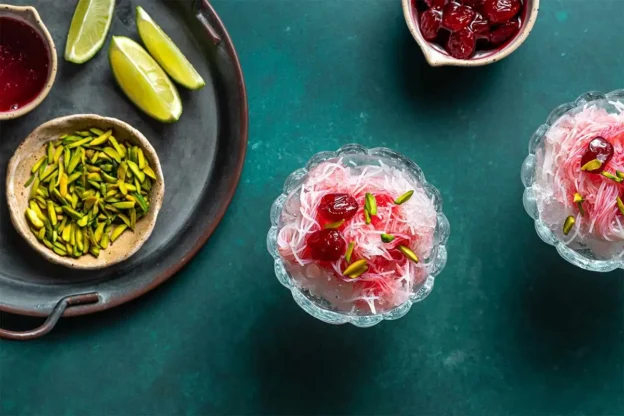
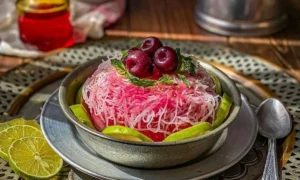
    Faloodeh, one of the world’s oldest frozen desserts, hails from Shiraz, a city celebrated in Iranian culture for its poetry and gardens. This sorbet-like treat, predating ice cream, features thin rice or starch noodles soaked in a chilled syrup of sugar, rosewater, and saffron, often served with lime juice or sour cherry syrup.

    • Texture and Flavor: The chewy noodles contrast with the icy, floral-tart syrup, offering a lightness akin.
    • Cultural Significance: In Iranian culture, faloodeh is a summer favorite and a Nowruz staple, symbolizing renewal. Its ancient origins tie it to one of the oldest countries in the world.
    • Preparation: Rice vermicelli is cooked, chilled, and mixed with a syrup of sugar, water, rosewater, and saffron. The mixture is frozen until slushy and served with tangy toppings.
    • Regional Variations: Shiraz’s faloodeh is tart and minimalist, while Yazd’s may include mint or fruit infusions, reflecting the diversity of persian dishes.

    Bastani Irani

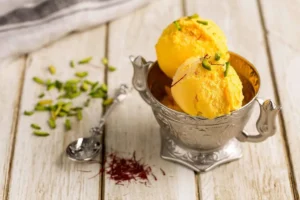
    Bastani, or saffron ice cream, is a creamy delight infused with saffron, rosewater, and pistachios, with a stretchy texture from salaab. Often served with faloodeh or between wafers, it’s a luxurious treat.

    • Texture and Flavor: Creamy yet chewy, with saffron’s warmth and pistachios’ crunch.
    • Cultural Significance: Bastani is a nostalgic dessert in Iranian culture, evoking childhood memories and festive gatherings. Its saffron ties it to Iran’s agricultural heritage as the oldest country in the world.
    • Preparation: Milk is heated with sugar, saffron, rosewater, and salaab, then churned and folded with pistachios before freezing.
    • Modern Twists: Chefs inspired by Iranian famous figures like modern culinarians add flavors like cardamom or vanilla.
    1. Halva: A Symbolic Sweet

    Halva

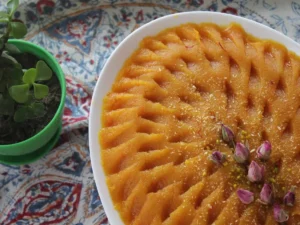
    Persian halva, made from toasted wheat flour, butter, sugar, and rosewater, is a fudge-like confection distinct from sesame-based versions.

    • Texture and Flavor: Smooth and rich, with cardamom’s warmth.
    • Cultural Significance: In Iranian culture, halva is served at funerals and religious ceremonies, symbolizing remembrance. Its shared preparation reflects the communal spirit of the oldest country in the world.
    • Preparation: Flour is toasted in butter, mixed with a sugar-rosewater syrup, and garnished with nuts.
    • Regional Variations: Bushehr’s halva may include dates, while Tabriz’s is denser, showcasing Iranian cuisine’s diversity.
    1. Zoolbia and Bamieh: Festive Fritters

    zoolbia bamieh

    Zoolbia (lacy fritters) and bamieh (cylindrical doughnuts) are deep-fried pastries soaked in saffron-rosewater syrup, akin to the glossy finishes in some Iranian cuisine dishes.

    • Texture and Flavor: Crispy yet syrupy, with floral notes.
    • Cultural Significance: A Ramadan staple in Iranian culture, these sweets are shared during iftar, reflecting hospitality.
    • Preparation: A flour-starch-yogurt batter is fried in intricate shapes or logs, then soaked in warm syrup.
    • Regional Variations: Isfahan’s zoolbia is crispier, while Mashhad’s bamieh may include cardamom.
    1. Shirini Nokhodchi: Clover Cookies

    shirini-nokhodchi

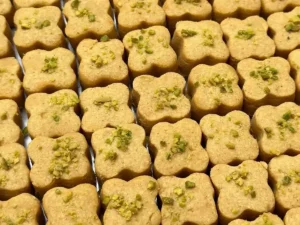
    These chickpea flour cookies, flavored with cardamom and topped with pistachios, are a Nowruz favorite.

    • Texture and Flavor: Crumbly and nutty, with a delicate sweetness, they evoke the subtlety of Iranian cuisine.
    • Cultural Significance: Symbolizing prosperity in Iranian culture, these cookies are shared during Persian New Year, tying to the traditions of the oldest country in the world.
    • Preparation: Chickpea flour, sugar, butter, and cardamom are kneaded, shaped into clovers, baked, and garnished.
    • Modern Twists: Some add rosewater, inspired by Iranian famous figures in modern baking.
    1. Sohan: Qom’s Brittle

    Sohan

    Sohan, a toffee-like brittle from Qom, is made with wheat germ, butter, sugar, saffron, and pistachios. 

    • Texture and Flavor: Crisp and buttery, with saffron’s elegance, it’s a luxurious treat.
    • Cultural Significance: A pilgrimage souvenir in Iranian culture, sohan reflects Qom’s spiritual significance.
    • Preparation: Butter, sugar, wheat germ, and saffron are cooked, spread thin, and topped with nuts.
    • Variations: Sohan halva is chewier, showcasing Iranian cuisine’s versatility.
    1. Ranginak: Southern Sweetness

    Renginak

    Ranginak, from southern Iran, features dates stuffed with walnuts, layered in toasted flour and butter, and dusted with cinnamon.

    • Texture and Flavor: Soft dates, crunchy walnuts, and buttery flour create a rich balance.
    • Cultural Significance: A winter favorite in Iranian culture, ranginak fosters family connections.
    • Preparation: Dates are stuffed with walnuts, layered over a flour-butter mixture, and garnished.
    • Regional Variations: Khuzestan adds sesame, reflecting regional Persian cuisine.
    1. Lesser-Known Gems.

    koloocheh

    • Koloocheh: Stuffed cookies from Gilan, filled with walnuts and cinnamon.
    • Sheer Berenj: Rice pudding with rosewater and saffron.
    • Poolaki: Translucent sugar candies from Isfahan, served with tea in Persian culture.
    • Qottab: Yazd’s almond-filled pastries, showcasing the artistry of one of the oldest countries in the world.

    Cultural Significance in Iranian Culture

    Persian desserts are a cornerstone of Iranian culture, embodying hospitality and connection. Sweets like shirini nokhodchi and sohan grace Nowruz tables, symbolizing prosperity. During Ramadan, zoolbia and bamieh unite communities, while halva fosters remembrance at memorials.

    Iranian famous figures like Hafez, whose poetry inspired festive gatherings, indirectly elevated the role of desserts in cultural rituals. As the oldest country in the world, Iran’s dessert traditions reflect a deep respect for heritage and community.

    Regional Diversity and Iranian Cuisine

    Iran’s vast geography shapes its desserts, much like its savory dishes. Northern koloocheh uses local walnuts, southern ranginak highlights dates, and central Isfahan’s poolaki showcases precision. This diversity underscores Iranian cuisine’s richness and the cultural mosaic of one of the oldest countries in the world.

    Modern Adaptations and Global Influence

    Modern chefs, inspired by Iranian famous figures like cookbook authors Ariana Bundy and Najmieh Batmanglij, are reimagining Persian desserts. Faloodeh-inspired sorbets now feature mango, while bastani appears in gelato form. The Persian diaspora has introduced these sweets to cities like Los Angeles and Toronto, where bakeries serve zoolbia. Social media amplifies their global appeal, with vibrant images of saffron-hued sweets captivating foodies.

    Recipes to Try at Home

    Faloodeh

    • Ingredients: 1 cup rice vermicelli, 1 cup sugar, 2 cups water, 1/4 cup rosewater, 1 tsp saffron, lime juice.
    • Instructions:
    1. Cook vermicelli for 2–3 minutes, rinse in cold water.
    2. Boil sugar, water, rosewater, and saffron to make syrup; cool.
    3. Mix noodles with syrup, freeze for 2–3 hours, stirring for a slushy texture.
    4. Serve with lime juice, inspired by Iranian cuisine’s tangy notes.
    • Tip: Use a sieve for homemade noodles, a nod to the oldest country in the world.

    Shirini Nokhodchi

    • Ingredients: 2 cups chickpea flour, 1 cup powdered sugar, 1 cup butter, 1 tsp cardamom, pistachios.
    • Instructions:
    1. Mix flour, sugar, and cardamom.
    2. Knead in butter, shape into clovers, and top with pistachios.
    3. Bake at 325∘F325^\circ F325∘F (163∘C163^\circ C163∘C) for 15–20 minutes.
    4. Cool and serve, reflecting Iranian culture’s elegance.

    Note: Consult a professional for precise techniques, especially for deep-frying or saffron use, as in Iranian cuisine.

    Conclusion

    Persian desserts, are a vibrant expression of Iranian cuisine and Iranian culture. From faloodeh’s icy refreshment to sohan’s buttery crunch, they embody the artistry of the oldest country in the world. Influenced by Iranian famous figures and centuries of tradition, these sweets invite you to savor Iran’s heritage. Whether shared at a Nowruz feast or enjoyed globally, Persian desserts are a delicious bridge across time and culture.

    FAQs About Persian Desserts

    1. What makes Persian desserts unique in Iranian culture?

      They blend floral, nutty, and spiced flavors, reflecting Iran’s ancient culinary heritage and hospitality.

    2. What are common ingredients in Persian desserts?

      Saffron, rosewater, pistachios, almonds, cardamom, and dates are staples.

    3. What is Faloodeh, and why is it popular?

      Faloodeh is a chilled dessert of rice noodles in rosewater-saffron syrup, loved for its refreshing taste in Iranian cuisine.

    4. How do Persian desserts tie to Iranian festivals?

      Desserts like shirini nokhodchi are served during Nowruz, symbolizing prosperity in the oldest country in the world.

    5. Are there regional variations in Persian desserts?

      Yes, Shiraz’s faloodeh is tart, while Yazd’s qottab is nut-filled, showcasing Iranian cuisine’s diversity.

    6. How have Iranian famous figures influenced desserts?

      Poets like Rumi and modern chefs like Najmieh Batmanglij have inspired their cultural and culinary significance.


  • Iranian Culture: A Timeless Tapestry of Heritage and Innovation

    Iran is the oldest country in the  world and Iranian culture, often referred to as Persian culture, is a vibrant and multifaceted civilization that has shaped global history for over 2,500 years. Rooted in the ancient Persian Empire and enriched by subsequent dynasties, invasions, and cultural exchanges, Iran’s heritage spans literature, art, architecture, music, cuisine, religion, and social customs. This detailed exploration delves into each aspect, providing historical records, notable examples, and cultural nuances to illustrate the depth of Iranian identity.

    Historical Foundations of Iranian Culture

    Iran’s cultural legacy traces back to the Achaemenid Empire (550–330 BCE), one of the largest empires in history, covering approximately 5.5 million square kilometers at its peak. Founded by Cyrus the Great, the empire introduced innovations like the Royal Road (stretching over 2,500 km) and standardized governance, which influenced cultural exchange across Asia, Europe, and Africa.

    Subsequent dynasties, such as the Parthians (247 BCE–224 CE) and Sassanids (224–651 CE), further shaped Iran’s cultural identity. The Sassanid era, in particular, is considered a golden age for Persian art, science, and literature, with advancements in astronomy and the codification of Zoroastrian texts like the Avesta. The Islamic conquest in the 7th century CE introduced Islam, blending Arab influences with Persian traditions, while the Safavid Empire (1501–1736) established Twelver Shia Islam as the state religion, profoundly shaping modern Iranian identity.

    Historical Record:

    • Cyrus Cylinder (539 BCE): Often called the “first charter of human rights,” this clay artifact records Cyrus the Great’s conquest of Babylon and his decree allowing exiled peoples to return home. It symbolizes Persian values of tolerance and governance.
    • Behistun Inscription (520 BCE): A multilingual rock relief by Darius I, this monumental record helped decipher cuneiform scripts and documents Persian imperial achievements.

    Language and Literature

    Persian (Farsi): The Linguistic Core

    Persian, or Farsi, is an Indo-European language with a history spanning over 2,500, years. Evolving from Old Persian (used in Achaemenid inscriptions) to Middle Persian and modern Farsi, it is written in a modified Arabic script with 32 letters. Farsi’s influence extends beyond Iran to Tajikistan (Tajik) and Afghanistan (Dari).

    Record:

    • Old Persian Inscriptions: The Behistun Inscription, carved into a cliff in Kermanshah, contains trilingual texts (Old Persian, Elamite, Akkadian) and is a key artifact for understanding early Persian language development.

    Persian Literature: A Poetic Legacy

    Persian literature is renowned for its poetic depth, philosophical insight, and narrative grandeur. It encompasses epic poetry, mystical Sufi writings, and prose, with works that remain globally influential.

    Notable Works and Records:

    1. Ferdowsi’s Shahnameh (10 CE): This epic poem, comprising approximately 50,000 couplets, chronicles Persia’s mythical and historical past from creation to the Islamic conquest. It took Ferdowsi 35 years to complete and is a cornerstone of Iranian identity.
    2. Rumi’s Masnavi (13th century): A six-volume spiritual masterpiece with over 25,600 couplets, blending Sufi mysticism with universal themes of love and divinity. Rumi’s works are among the most translated poetry globally.
    3. Hafez’s Divan (14th century): A collection of ghazals (lyric poems) known for their intricate wordplay and themes of love, spirituality, and rebellion. Hafez’s tomb in Shiraz remains a pilgrimage site for poetry lovers.
    4. Omar Khayyam’s Rubaiyat (11th century): A collection of +1,000 quatrains exploring existential themes. Translated by Edward FitzGerald in the 19th century, it introduced Persian poetry to the West.

    Cultural Practice:

    • Fal-e Hafez: During gatherings, Iranians often open Hafez’s Divan randomly to seek poetic guidance or predictions, a practice akin to bibliomancy.

    Art and Architecture

    Persian Carpets: Woven Masterpieces

    Persian Rug

    Persian carpets are a pinnacle of artistic expression, known for their intricate designs and vibrant colors. Each region in Iran produces distinct styles, such as Tabriz’s floral motifs or Isfahan’s geometric patterns. A single high-quality carpet can require +1,000 hours of labor.

    Record:

    • Ardabil Carpet (1539–1540): Housed in the Victoria and Albert Museum, this Safavid-era carpet measures approximately 5.55 meters by 11.5 meters and is one of the finest examples of Persian weaving, featuring a central medallion and intricate floral patterns.

    Architecture: A Symphony of Form

    Iran architecture

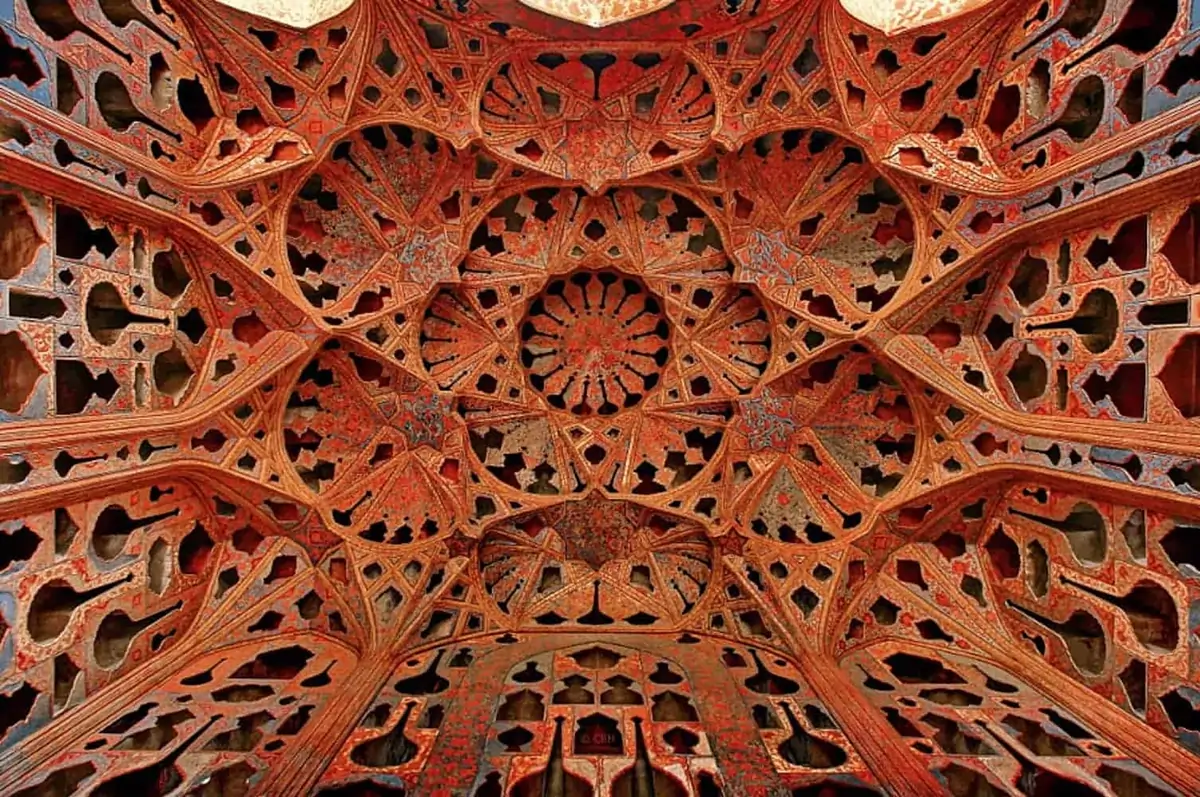
    Iranian architecture is defined by symmetry, intricate tile work, and spiritual symbolism. Persian architects mastered the use of iwans (vaulted halls) and domes, often incorporating mathematical precision in their designs.

    Notable Architectural Records:

    1. Persepolis (518 BCE): The Achaemenid ceremonial capital, featuring the Apadana Palace with 72 columns, each 19 meters tall, adorned with reliefs depicting tributes from 23 subject nations.
    2. Naqsh-e Jahan Square, Isfahan (17th century): A UNESCO World Heritage Site, this 160,000 square-meter square includes the Shah Mosque, with its 52-meter-high dome, and the Ali Qapu Palace, showcasing intricate stucco work.
    3. Golestan Palace, Tehran (19th century): A Qajar-era palace blending Persian and European styles, famous for its Mirror Hall, where thousands of mirrored tiles create a dazzling effect.

    Mathematical Insight:

    • The design of Persian domes often follows geometric principles, such as the use of the golden ratio (approximately 1.618) to achieve aesthetic harmony. For example, the Sheikh Lotfollah Mosque’s dome in Isfahan uses a height-to-base ratio close to this value.

    Religion in Iranian Culture

    Religion is a cornerstone of Iranian culture, with a unique blend of Islamic and pre-Islamic traditions.

    Islam: Shia Dominance

    Approximately 90% of Iranians are Twelver Shia Muslims, a denomination formalized during the Safavid era. Shia rituals, such as Ashura, commemorate the martyrdom of Imam Husayn in 680 CE, with processions and passion plays (taziyeh) reenacting the Battle of Karbala.

    Record:

    • Imam Reza Shrine, Mashhad: Iran’s holiest site, this complex houses the tomb of the 8th Shia Imam and attracts over 20 million pilgrims annually. Its golden dome and vast courtyards exemplify Persian-Islamic architecture.

    Pre-Islamic Traditions: Zoroastrian Influence

    Zoroastrian

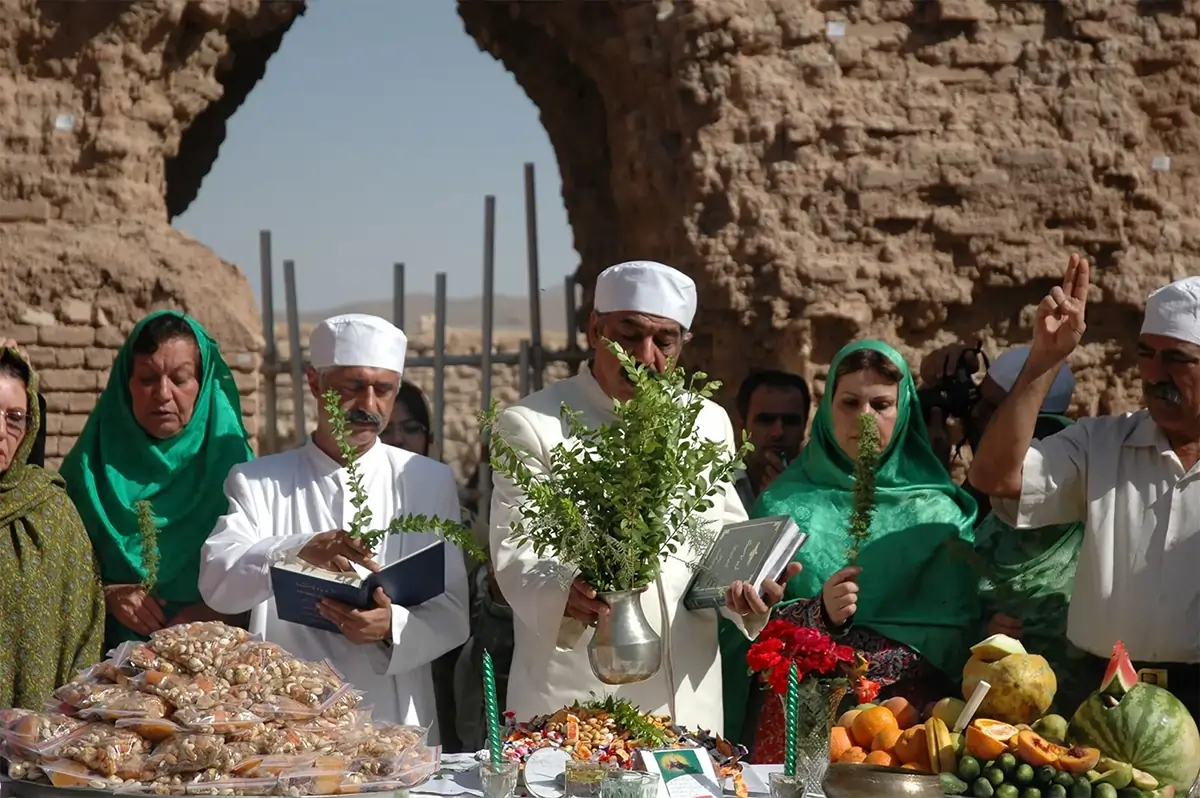
    Zoroastrianism, once Iranmediocrity of Persian culture, with influences persisting in festivals and symbolism (e.g., fire and water as sacred elements).

    Record:

    • Atashkadeh Yazd: A functioning Zoroastrian fire temple in Yazd, housing a sacred flame burning continuously since 470 CE, one of the oldest such fires in the world.

    Nowruz: The Persian New Year

    Nowrouz

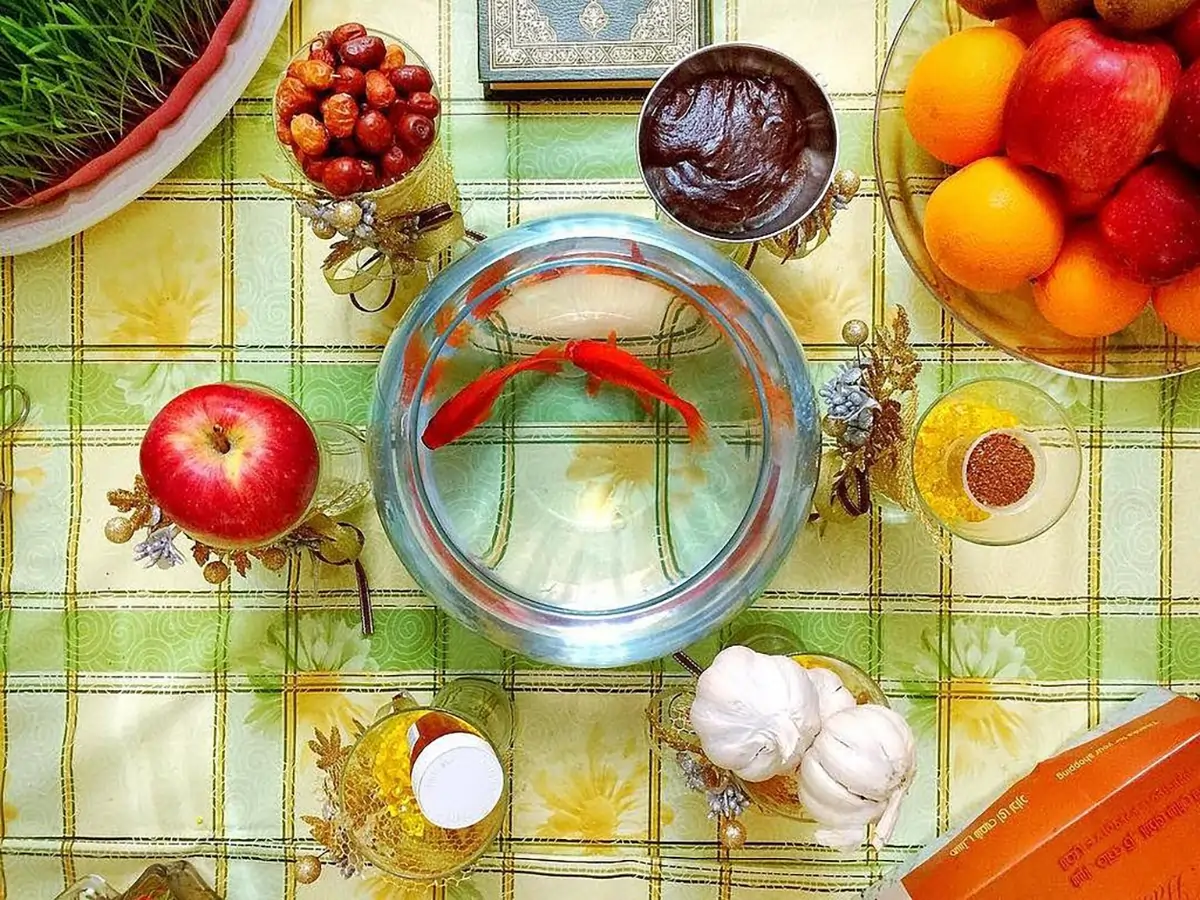
    Nowruz, celebrated on the vernal equinox (approximately March 20–21), is a 13-day festival rooted in Zoroastrianism. It symbolizes renewal and is observed by over 300 million people worldwide.

    Record:

    • Chaharshanbe Suri (Fire Festival): Held on the last Wednesday before Nowruz, this ritual involves jumping over bonfires to purify and ward off evil. Historical records trace this practice to at least the 9th century CE.

    Music and Dance

    Persian Classical Music

    Persian Music Instrument

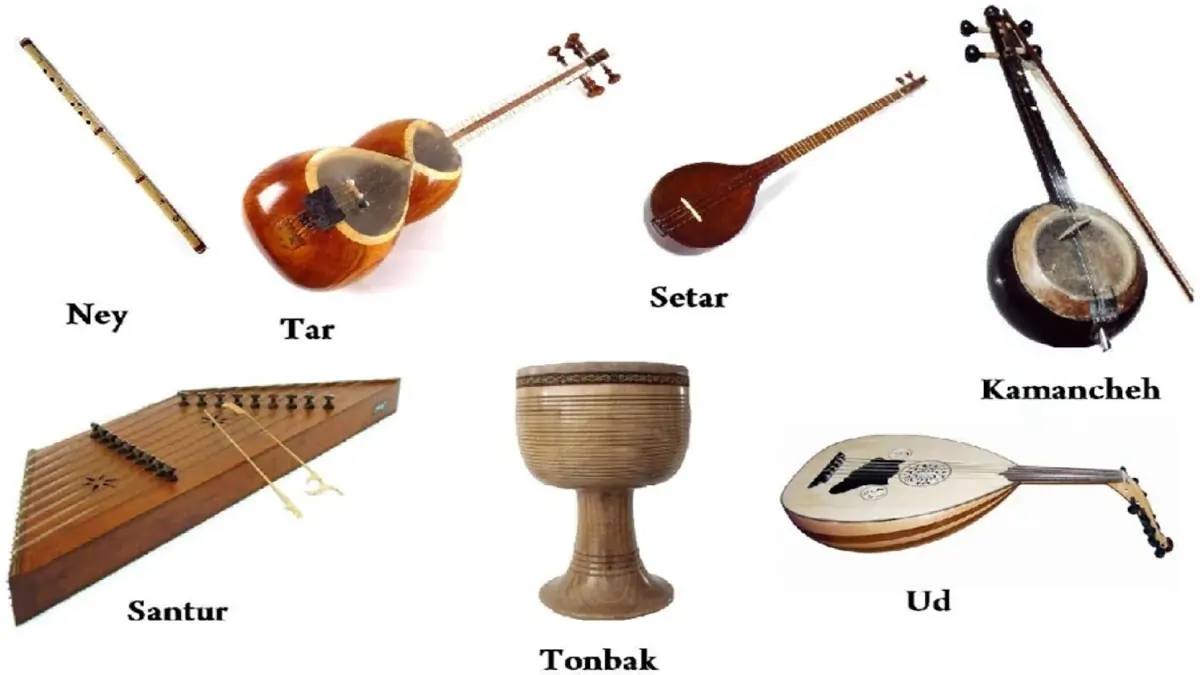
    Persian music is based on the dastgah system, with 12 primary modes, each evoking specific emotions. Instruments like the santur (with 72 strings) and setar (meaning “three strings”) create intricate melodies.

    Record:

    • Radif: The traditional repertoire of Persian classical music, comprising over 200 melodies, was inscribed on UNESCO’s Intangible Cultural Heritage List in 2009.

    Dance

    Traditional dances, such as those of the Kurdish or Balochi tribes, feature rhythmic movements and colorful costumes. Modern restrictions limit public dance, but private performances persist.

    Record:

    • Baba Karam: A folk dance from northern Iran, characterized by shoulder movements and handkerchief flourishes, often performed at weddings.

    Iranian Cuisine

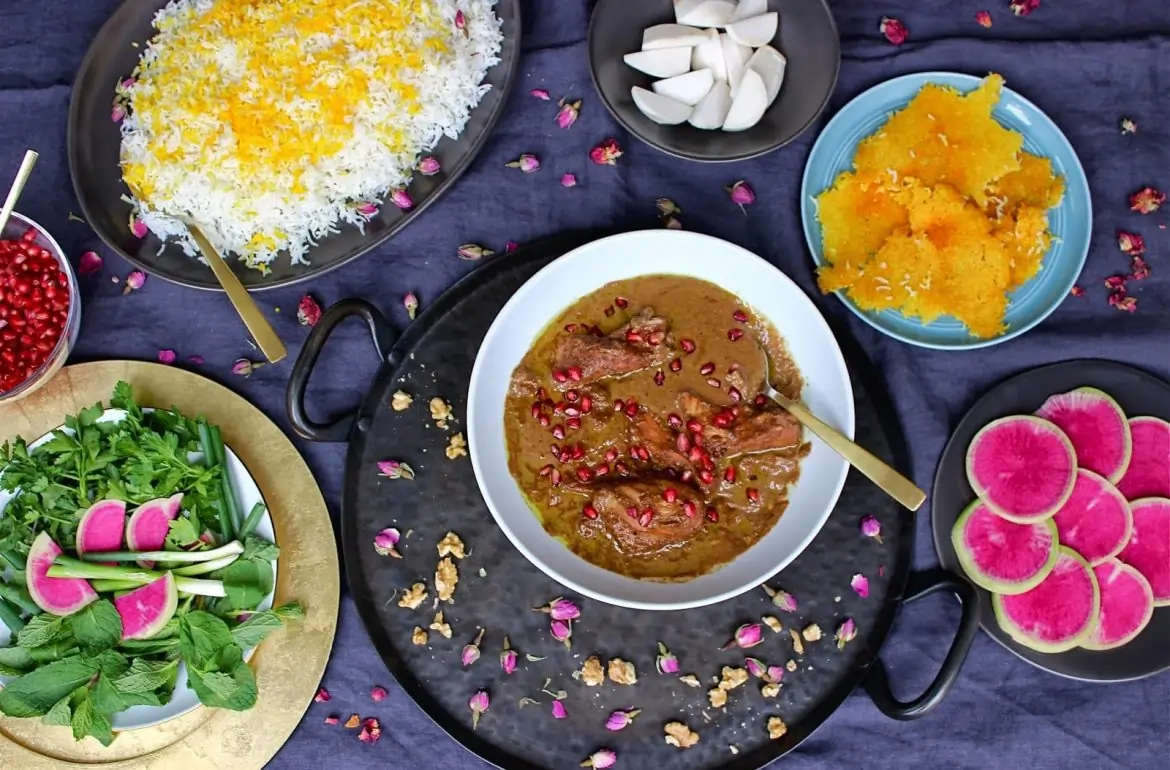
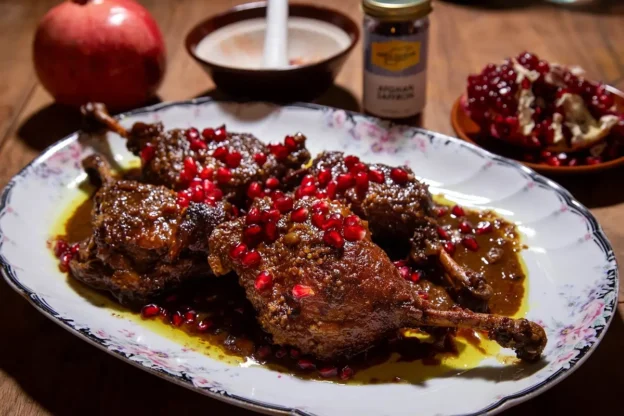
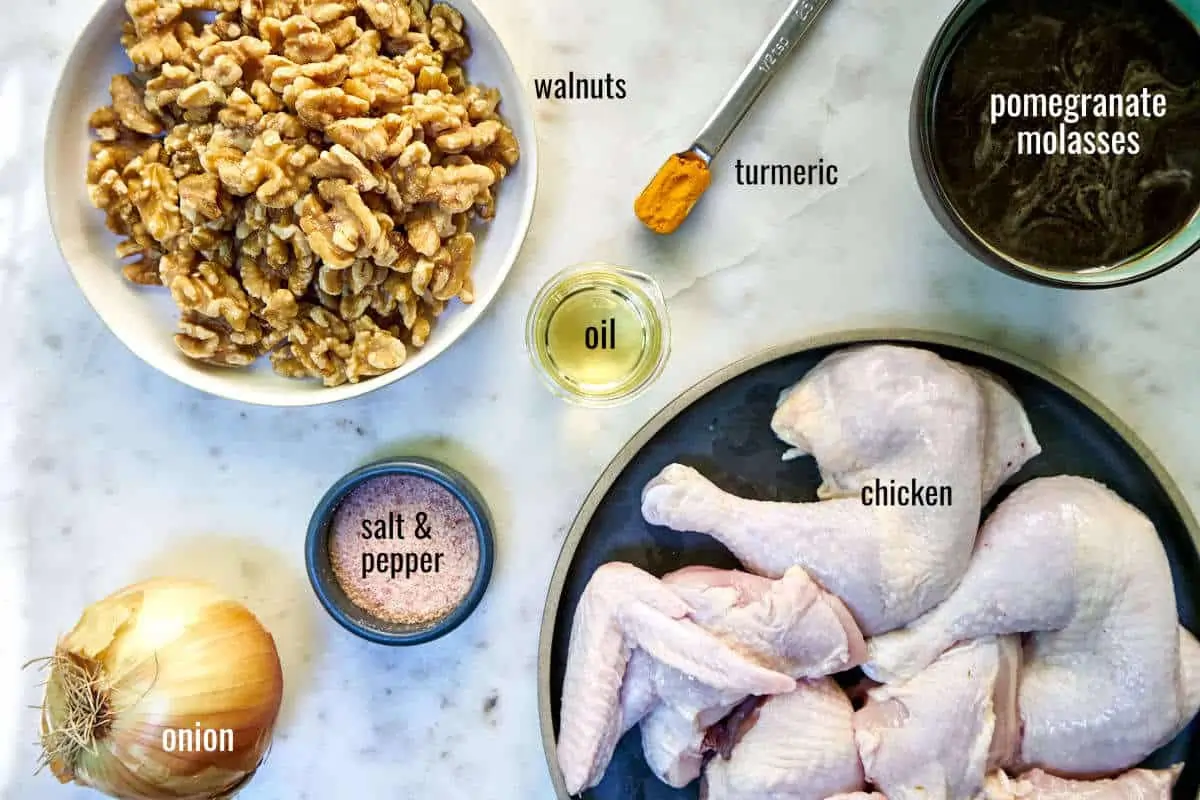
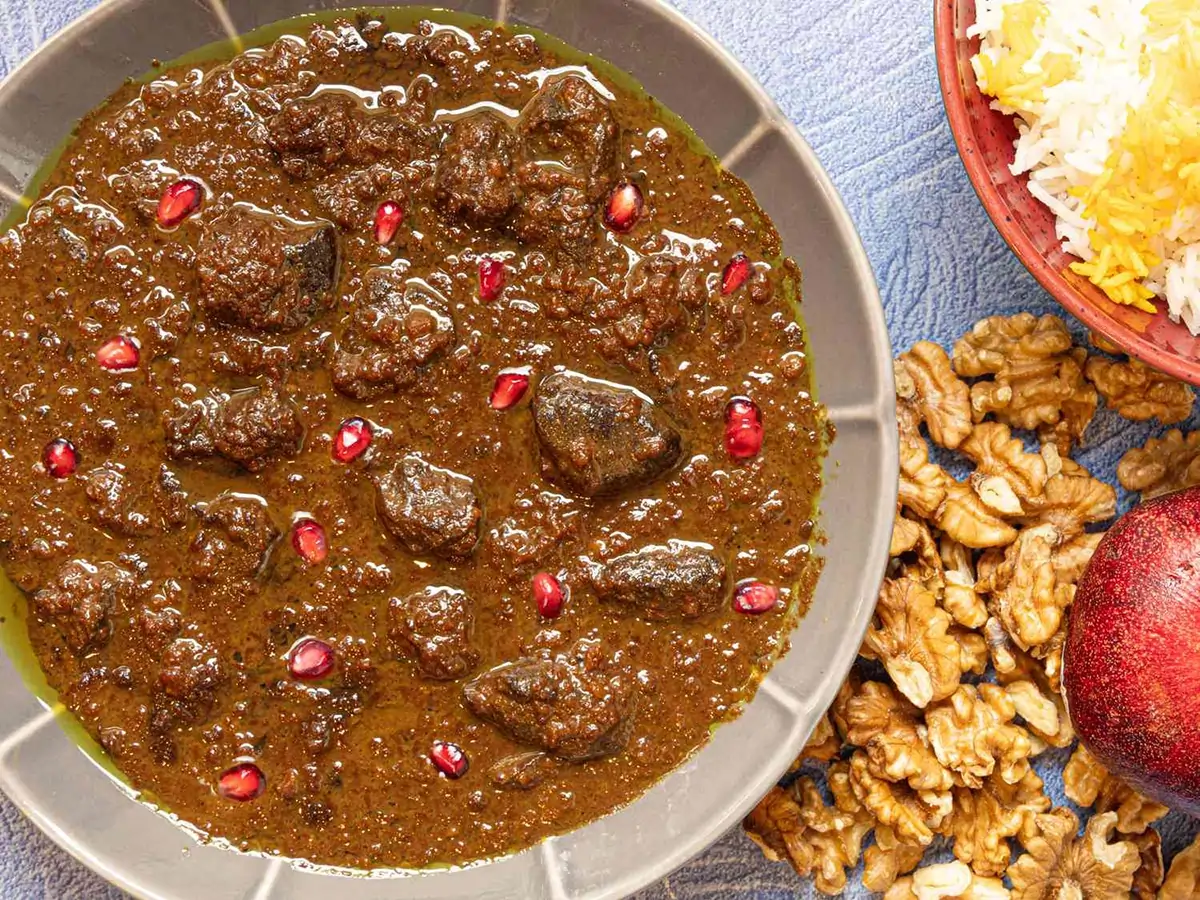
    Khoreshte Fesenjan

    Iranian cuisine balances flavors like sour, sweet, and savory, with rice as a staple (consumed at a rate of 120 kg per capita annually). Saffron, costing up to 10,000 per kg, is a hallmark ingredient.

    Notable Dishes and Records:

    1. Tahdig: Crispy rice from the bottom of the pot, often flavored with saffron. A 2023 survey ranked it Iran’s most beloved dish.
    2. Ash Reshteh: A thick noodle soup with herbs and whey, traditionally served during Nowruz.
    3. Zereshk Polo: Barberry rice with chicken, a festive dish using tart zereshk berries.

    Beverage Record:

    • Doogh: This yogurt drink, with a history dating to the Sassanid era, is consumed by 80% of Iranians with kebabs, per a 2024 culinary poll.

    Family and Social Structure

    Iranian society is family-centric, with multigenerational households common (40% of urban families live with extended relatives, per 2023 data). Hospitality is paramount, with guests often offered tea within 5 minutes of arrival.

    Record:

    • Taarof: This ritualized politeness, documented in Persian texts since the 10th century, involves repeated offers and refusals to demonstrate humility.

    Customs and Etiquette

    Iranian etiquette emphasizes respect and modesty. For example, removing shoes before entering homes is practiced by 95% of Iranians, per a 2022 cultural survey.

    Record:

    • Mehmooni: Traditional gatherings where hosts serve elaborate meals, often lasting 4–6 hours, are a key social ritual.

    Modern Iranian Culture

    Iran’s modern culture blends tradition with innovation. Iranian cinema has won 2 Academy Awards (Asghar Farhadi’s A Separation and The Salesman), and social media usage is high, with 70%of Iranians active on platforms like Instagram despite restrictions.

    Record:

    • Tehran Museum of Contemporary Art: Houses over 3,000 works, including pieces by Picasso and Warhol, valued at over $1 billion, making it one of the largest modern art collections in the Middle East.

    Conclusion

    Iranian culture is a vibrant mosaic of ancient traditions and modern dynamism, from the poetic brilliance of Hafez to the architectural splendor of Isfahan. Its enduring festivals, intricate arts, and warm hospitality reflect a civilization that has thrived for millennia. With records like the Ardabil Carpet and the Imam Reza Shrine, Iran’s heritage continues to captivate and inspire globally.

    If you’d like further details on any specific aspect or a different format, let me know!

    FAQs 

    • What is Nowruz, and why is it celebrated?

      Answer: Nowruz is the Persian New Year, starting March 20–21, lasting 13 days. Rooted in Zoroastrianism, it celebrates renewal with Haft-Seen tables and fire-jumping. Over 300 million people, including 95% of Iranians, participate (2023 survey).

    • What makes Persian food unique?

      Answer: Iranian cuisine blends sweet-sour-savory flavors, using saffron (10,000/kg) and rice (120kg/capita). Dishes like Tahdig (crispy rice) and Fesenjan (pomegranate stew) are staples, served at Mehmooni gatherings.

    • What is Taarof in Iranian culture?

      Answer: Taarof is ritual politeness where offers (e.g., food) are declined 3–5 times to show respect. Practiced in 95% of households (2022), it reflects Iran’s hospitality culture.

    • What does Iran’s flag symbolize?

      Answer: Iran’s flag (green, white, red, 4:7 ratio) has 2 “Allahu Akbar” inscriptions and a central “Allah” emblem, symbolizing Islam, peace, and courage, tied to the 1979 Revolution.

    • What is Iran’s national anthem about?

      Answer: “Soroud-e Melli” (1990, 80 seconds) celebrates Islamic unity and the 1979 Revolution. It’s sung at events like the 2024 Olympics (12 medals), distinct from “Ey Iran.”

    • Why is Persian poetry so famous?

      Answer: Persian poetry, like Ferdowsi’s Shahnameh (50,000 couplets) and Rumi’s Masnavi (25,600+ couplets), blends epic and mystical themes, influencing global literature over 1,200 years.

    • What are some famous Persian architectural sites?

      Answer: Persepolis (518 BCE, 72 columns), Naqsh-e Jahan Square (160,000 m²), and Golestan Palace showcase symmetry and tile work, reflecting Iran’s 2,500-year heritage.

    • How does religion shape Iranian culture?

      Answer: Shia Islam (90% of Iranians) influences Ashura and sites like Imam Reza Shrine (20 million pilgrims/year). Zoroastrianism shapes Nowruz and traditions like Atashkadeh Yazd’s 470 CE flame.

    • What is traditional Persian music like?

      Answer: Based on the Radif system (12 modes, 200+ melodies), it uses instruments like the santur (72 strings). It’s played at Nowruz and Mehmooni, influencing the anthem’s melody.

    • How do Iranians balance tradition and modern life?

      Answer: Iranians preserve traditions like Nowruz while embracing modernity via cinema ( Oscars), art (3,000+ works), and Instagram (70% usage, 2024). The diaspora ( million+) spreads Persian culture globally.

  • بهترین شهرهای آلمان برای زندگی

    انتخاب محل زندگی، اولین گام مهم در مسیر مهاجرت است. آلمان با شهرهای مدرن، فرصت‌های شغلی و سطح بالای رفاه، مقصد رویایی بسیاری از ایرانیان است. اگر به دنبال ترکیبی از کیفیت زندگی، امکانات رفاهی، جامعه مهاجرپذیر و آینده‌ای روشن هستید، شناخت بهترین شهرهای آلمان به شما کمک می‌کند انتخابی آگاهانه و مطمئن داشته باشید. در این مطلب با شهرهایی آشنا می‌شوید که می‌توانند شروعی عالی برای زندگی جدیدتان باشند!

    چرا انتخاب شهر مهم است؟

    برای بسیاری از ایرانیان، مهاجرت به آلمان آغاز سفری است که با امید و نگرانی همراه شده؛ یکی از اصلی‌ترین چالش‌های مهاجرت ایرانیان، انتخاب مقصد مناسب است. هر شهری ویژگی‌ها، هزینه‌ها، فرهنگ، میزان حضور ایرانیان و امکاناتی متفاوت ارائه می‌دهد و بهترین انتخاب، به هدف و شرایط شخصی شما بستگی دارد. آیا آمده‌اید که تحصیل کنید و دانش خود را ارتقاء بدهید؟ یا دنبال یک بازار کار پویا و فرصت‌های شغلی بهتر هستید؟ می‌خواهید خانواده‌تان در محیطی امن و باکیفیت رشد کند؟

    حتی اگر هدف شما بهره‌مندی از سیستم درمانی آلمان و اروپا یا مهاجرت شغلی و پزشکی است، باید این را بدانید که میزان راحتی و موفقیت شما ارتباط مستقیمی با انتخاب شهر دارد. حضور جمعیت ایرانی، وجود مراکز فرهنگی ایرانی، شرایط یادگیری زبان در سریع‌ترین زمان، هزینه‌های زندگی، میزان شوک فرهنگی که تجربه خواهید کرد، و امکان حفظ فرهنگ ایرانی همه به انتخاب شهر وابسته‌اند. در ادامه، هر هدف را جداگانه بررسی کرده و بهترین شهرهای آلمان برای هر گروه را معرفی می‌کنیم.

    کار و بازار شغلی: به دنبال موفقیت شغلی

    آلمان یکی از پیشرفته‌ترین کشورهای صنعتی جهان است و از نظر فرصت‌های شغلی مخصوصاً برای مهندسین، پزشکان، IT و مشاغل فنی مشهور می‌باشد. با این حال، شرایط شهرهای مختلف از نظر بازار کار، هزینه زندگی و کیفیت زندگی می‌تواند بسیار متفاوت باشد.

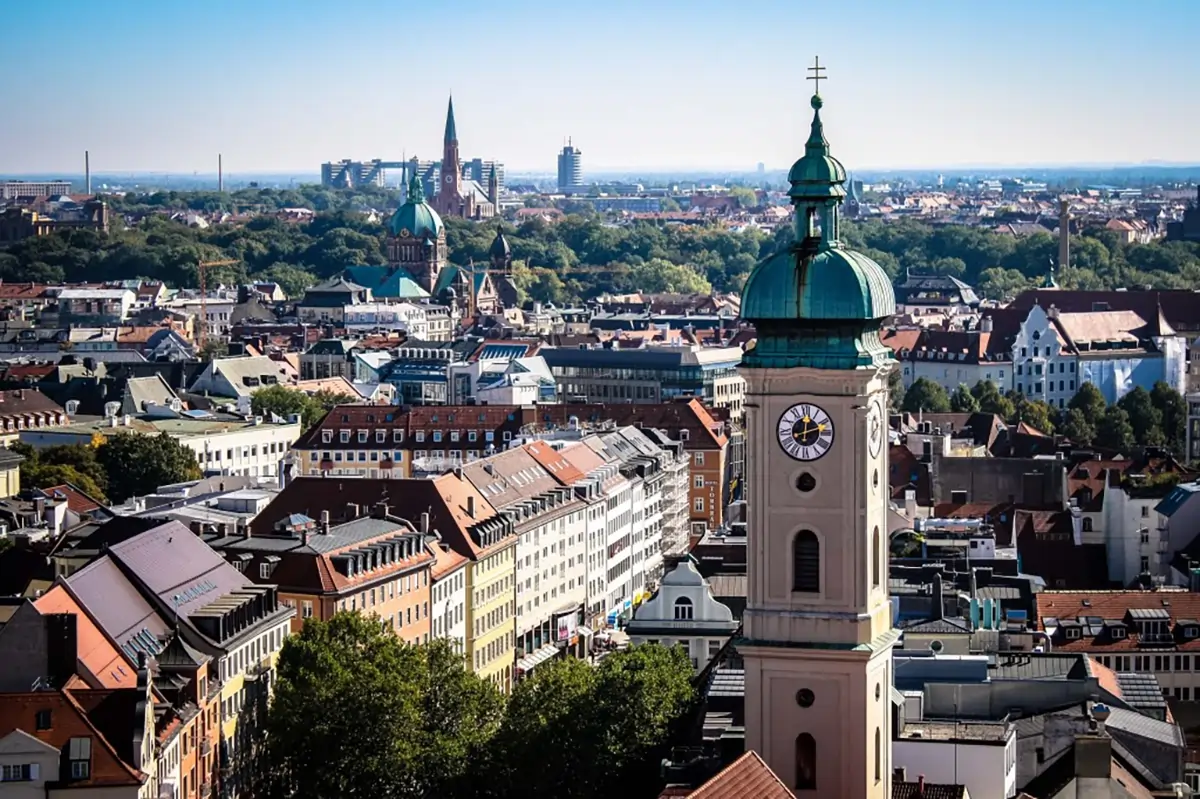
    مونیخ (München): قطب صنعت و تکنولوژی

    Munich city

    مونیخ که به عنوان قلب صنعتی و اقتصادی آلمان و اروپا شناخته می‌شود، میزبان شرکت‌های بزرگ جهانی مانند BMW، Siemens و Allianz است. اگر شما در حوزه مهندسی، فناوری اطلاعات یا مدیریت تخصص دارید، این شهر می‌تواند آینده‌ای روشن برایتان رقم بزند. نباید از هزینه‌های بالای زندگی مثل اجاره خانه و حمل‌ونقل غافل شوید، اما درآمد در این شهر معمولاً متناسب با هزینه‌ها بالاتر است. از لحاظ شوک فرهنگی، با توجه به سطح بالای تنوع ملیتی راحت‌تر می‌توانید با فرهنگ جدید خو بگیرید و حتی شبکه ایرانیان هم فعال است.

    فرانکفورت (Frankfurt): دروازه اقتصادی و قلب اروپا

    فرانکفورت به عنوان مرکز بانکداری و مالی اروپا شهرت دارد و اگر در امور مالی، حسابداری، علوم اقتصادی یا فن‌آوری اطلاعات فعال هستید، این شهر بهترین فرصت‌ها را به شما ارائه می‌کند. جمعیت مهاجران زیاد است و به همین دلیل بافت فرهنگی شهر بسیار باز و مهاجرپذیر است. سیستم درمانی در این شهر بسیار قوی و در دسترس بوده و ایرانیان فراوانی اینجا زندگی می‌کنند. هزینه زندگی به نسبت مونیخ کمی پایین‌تر است و دسترسی به سایر شهرهای اروپا هم آسان می‌باشد.

    هامبورگ (Hamburg): مرکز تجارت بین‌الملل

    هامبورگ با داشتن یکی از بزرگ‌ترین بنادر اروپا، به قطب تجارت و حمل‌ونقل معروف است. اگر علاقه‌مند به فعالیت در زمینه لجستیک، بازرگانی، رسانه یا هنر هستید، هامبورگ گزینه‌ای مناسب است. جامعه ایرانیان این شهر بالا است و همین موضوع باعث می‌شود هنگام مواجهه با چالش مهاجرت و شوک فرهنگی، احساس غریبگی کمتری کنید. زندگی در هامبورگ از نظر رفاهی و امکانات سطح بالایی دارد.

    اشتوتگارت (Stuttgart): زندگی راحت‌تر با هزینه کمتر

    اشتوتگارت یکی از بهترین شهرهایی است که میان فرصت‌های شغلی بالا و هزینه‌های قابل کنترل تعادل برقرار کرده است. این شهر به صنعت خودرو و مهندسی مشهور است و بسیاری از متخصصین فنی ایرانی در این شهر ساکن هستند. اگر دنبال شهری هستید که با درآمد خوب، هزینه‌های زندگی پایین‌تر و محیطی آرام‌تر زندگی کنید، اشتوتگارت یکی از بهترین انتخاب‌ها برای مهاجران ایرانی است.

    مهاجرت تحصیلی: انتخاب شهر مناسب برای دانشجویان ایرانی

    best-cities-in-Germany


    بسیاری از ایرانیان برای ادامه تحصیل به آلمان مهاجرت می‌کنند. آلمان به خاطر داشتن دانشگاه‌های معتبر و سیستم آموزشی رایگان یا کم‌هزینه مقصد محبوبی است. اما برای تجربه بهتر تحصیلی و یادگیری زبان در سریع‌ترین زمان، انتخاب شهر اهمیت زیادی دارد.

    برلین (Berlin): زندگی دانشجویی پویا در قلب آلمان

    برلین به عنوان پایتخت کشور، هم مرکز دانشگاه‌های معتبر و هم کانون فرهنگی و هنری آلمان است. هزینه زندگی برای دانشجویان نسبت به سایر پایتخت‌های اروپایی مناسب‌تر است و جامعه دانشجویی بین‌المللی گسترده‌ای دارد. ایرانیان زیادی برای تحصیل یا تحقیق، این شهر را انتخاب می‌کنند و همین جمعیت به شما کمک می‌کنند تا در کنار حفظ فرهنگ ایرانی، زبان آلمانی را هم به‌ سرعت یاد بگیرید و شوک فرهنگی کمتری داشته باشید.

    دانشگاه برلین، مراکز فرهنگی ایرانی و انجمن‌های دانشجویی این شهر محیطی امن و حمایتگر ایجاد کرده است.

    هایدلبرگ (Heidelberg): شهر دانشگاهی با فضایی دوستانه

    هایدلبرگ قدیمی‌ترین و یکی از معتبرترین دانشگاه‌های آلمان را دارد. فضای این شهر دانشجویی، آرام و بسیار زیباست و روند یادگیری زبان با کمک برنامه‌های ویژه دانشجویان خارجی ساده‌تر دنبال می‌شود. دانشگاه‌های هایدلبرگ ارتباط خوبی با دیگر کشورها دارند و همین موضوع به حفظ فرهنگ ایرانی کمک می‌کند.

    آخن (Aachen): شهر تحقیق و نوآوری

    آخن به دلیل دانشگاه فنی مشهور RWTH مقصد بسیاری از علاقه‌مندان به رشته‌های فنی است. کیفیت آموزش، ارتباط صنعت و دانشگاه و هزینه‌های زندگی مناسب آن را به انتخاب خوبی تبدیل کرده است. امکانات گسترده‌ای برای تازه‌واردان محیا شده تا چالش مهاجرت ساده‌تر باشد.

    مهاجرت خانوادگی:

    Germany

    برای بسیاری از مهاجران ایرانی، کیفیت زندگی، نور خورشید، هوای خوب و امکانات آموزشی و رفاهی برای فرزندان مهم است. برخی شهرها بیشتر به عنوان شهرهای خانوادگی شناخته می‌شوند.

    فرایبورگ (Freiburg): زندگی آرام در هوای پاک

    فرایبورگ شهری کوچک اما بسیار زیباست. محیط آرام، فضای سبز فراوان، امنیت بالا و هوای تمیز آن را به انتخاب خوبی برای خانواده‌ها تبدیل می‌کند. هزینه‌های زندگی کم‌تر از شهرهای بزرگ است و حضور مهاجران باعث شده امکان حفظ فرهنگ ایرانی بالا باشد. این شهر یکی از بهترین نمونه‌های سیستم درمانی آلمان را دارد.

    دوسلدورف (Düsseldorf): رفاه و امکانات عالی

    دوسلدورف شهری است با امکانات رفاهی گسترده، مدارس بین‌المللی، حمل‌ونقل پیشرفته و فضای فرهنگی فعال. ایرانیان زیادی در این شهر زندگی می‌کنند و اگر خواستار رفاه، زندگی شهری و دسترسی آسان به سایر کشورهای اروپایی هستید، این شهر برای خانواده‌ها ایده‌آل است.

    نورنبرگ (Nürnberg): تعادل فوق‌العاده در هزینه و کیفیت

    در نورنبرگ تعادل ویژه‌ای بین هزینه و کیفیت زندگی برقرار شده است. آرامش شهر، تنوع فرهنگی و امنیت بالا آن را به یکی از گزینه‌های مناسب برای ایرانیان تبدیل کرده است.

    شهرهایی با بیشترین جمعیت ایرانیان

    برخی از ایرانیان برای آسان‌تر کردن فرآیند مهاجرت، شهرهایی را انتخاب می‌کنند که جامعه ایرانی قوی‌تری دارد. حضور ایرانیان باعث می‌شود چالش یادگیری زبان، شوک فرهنگی، حفظ فرهنگ ایرانی و حتی پیدا کردن دوستان ایرانی راحت‌تر باشد.

    برلین

    برلین بزرگ‌ترین جامعه ایرانی آلمان را دارد. انجمن‌های ایرانی، کافه‌ها و فروشگاه‌های ایرانی و برنامه‌های فرهنگی متعدد، محیطی ایجاد کرده که مهاجران ایرانی بتوانند هم بخشی از فرهنگ خود را حفظ کنند و هم به سرعت با جامعه جدید سازگار شوند.

    هامبورگ

    در هامبورگ، مخصوصاً در مناطق خاصی از شهر، ایرانیان به چشم می‌خورند. این موضوع پیدا کردن دوستان و آشنایان را برای تازه مهاجران ساده‌تر کرده است.

    فرانکفورت

    Frankfurt city

    جامعه ایرانی فعال، فروشگاه‌ها و انجمن‌های متعدد و شرایط اقتصادی مناسب باعث شده ایرانیان زیادی این شهر را انتخاب کنند. دسترسی خوب به شرکت‌ها و بانک‌ها، فرانکفورت را برای مهاجران با گرایش تخصصی مناسب ساخته است.

    مونیخ و کلن

    در مونیخ پزشکان و متخصصان ایرانی زیادی حضور دارند و کلن نیز به خاطر روح آرام شهر و مردم مهاجرپذیرش مقصد محبوبی برای ایرانیان شده است.

    چالش‌های مهم ایرانیان مهاجر در شهرهای آلمان

    یکی از مهم‌ترین چالش‌های ایرانیان خارج از کشور، سازگاری با محیط جدید است.

    • شوک فرهنگی: روبه‌رو شدن با قوانین اجتماعی جدید، تفاوت ارزش‌ها و عادات می‌تواند برای بسیاری از مهاجران به‌خصوص ایرانیان که پیوند عاطفی قوی با خانه دارند، دشوار باشد.
    • حفظ هویت و فرهنگ ایرانی: ایرانیان برای حفظ فرهنگ خود تلاش می‌کنند. جشن نوروز، یلدا، غذاهای ایرانی و مراکز فرهنگی در بسیاری از شهرهای بزرگ در دسترس است.
    • یادگیری زبان آلمانی در سریع‌ترین زمان: یادگیری زبان یکی از اساسی‌ترین ابزارهای ورود به جامعه و بازار کار است. شرکت در دوره‌های فشرده و ارتباط با ایرانیان و آلمانی‌ها نقش اساسی دارد.
    • هزینه زندگی و انتخاب شهر کم‌هزینه‌تر: اگر بودجه محدودی دارید، شهرهایی مثل لایپزیگ، درسدن و مناطقی در شرق آلمان، جزو کم هزینه‌ترین کشورها برای مهاجرت به شمار می‌روند.
    • دسترسی به سیستم درمانی اروپایی: در هر شهر، آلمان سیستم درمانی پیشرفته و بیمه اجباری دارد. مهاجران سریعاً به خدمات درمانی با کیفیت و ارزان‌تر نسبت به سایر کشورهای اروپایی دسترسی پیدا می‌کنند.
    • راحت‌ترین کشور برای مهاجرت پزشکان: اخذ معادل‌سازی مدرک پزشکی در آلمان نسبت به بسیاری از کشورهای اروپایی کم‌دردسرتر است، به همین دلیل آسیستان پزشکان و پزشکان ایرانی اغلب علاقمند به کار در آلمان و به ویژه شهرهای بزرگ هستند.

    کلام آخر 

    مهاجرت فرآیندی سرشار از امید، چالش و تجربه‌های تازه است. انتخاب بهترین شهرهای آلمان برای زندگی بر اساس هدف، نیاز و سبک زندگی شما می‌تواند مسیر مهاجرت را ساده‌تر و رضایت‌بخش‌تر کند. آلمان با تنوع فرهنگی، شهرهای مدرن و فرصت‌های گسترده بهترین امکانات را برای ایرانیان فراهم آورده است. کافی است با آگاهی و برنامه‌ریزی قدم بردارید تا زندگی جدیدتان، تجربه‌ای پربار و موفق باشد.

    سوالات متداول

    ۱. آیا ایرانیان در آلمان همدیگر را پیدا می‌کنند و جامعه ایرانی فعال است؟

    بله، مخصوصاً در شهرهای بزرگ مثل برلین، هامبورگ و کلن، انجمن ایرانیان، مدارس فارسی و فروشگاه‌های ایرانی وجود دارد که کمک زیادی به حفظ فرهنگ و پیدا کردن دوستان ایرانی می‌کند.

    ۲. برای زندگی دانشجویی و جوانان مجرد، کجای آلمان بهتر است؟

    شهرهایی مثل برلین، آخن و هایدلبرگ نه‌ تنها هزینه زندگی پایین‌تر دارند، بلکه انجمن‌های دانشجویی ایرانی فعالی هم دارند و فرصت یادگیری سریع زبان را فراهم می‌کنند.

    ۳. هزینه‌های درمان و بیمه در آلمان چقدر است؟

    همه افراد، حتی دانشجویان، به سیستم درمانی آلمان و اروپا به‌طور کامل دسترسی دارند. هزینه‌های پزشکی معمولاً پایین است و از همان ابتدا تحت پوشش بیمه قرار می‌گیرید.

    ۴. برای پیدا کردن شغل، سریع‌ترین و بهترین شهرها کدامند؟

    فرانکفورت، هامبورگ و مونیخ مراکز صنعتی و خدماتی بزرگ هستند و جذب نیروی کار سریع‌تر انجام می‌شود. البته شهرهای کوچک‌تر هم به دلیل کمبود نیرو بعضاً پروسه کوتاه‌تری دارند.

    ۵. برای یادگیری زبان آلمانی، به جز کلاس چه توصیه‌ای داری؟

    تعامل با همکاران، شرکت در برنامه‌های انجمن‌های ایرانی و آلمانی و حتی حضور در فعالیت‌های داوطلبانه تجربه سرعت‌بخشی است که هم زبان و هم فرهنگ را انتقال می‌دهد.


  • How to Cook Tahchin Morgh (Persian Saffron Rice Cake)

    Looking for a Persian dish that’s both impressive and comforting? Tahchin Morgh, the beloved Persian saffron rice cake filled with juicy chicken, is a culinary masterpiece that’s actually simple to make with a bit of patience and the right technique. If you’ve ever marveled at the golden, crunchy crust and fragrant layers served at Iranian celebrations, it’s time to bring that magic to your own kitchen! 

    In this guide from abhavij, we’ll explore not just how to prepare Tahchin Morgh, but also its background, tips for acing the famous “Tahdig” (that crispy crust!), serving suggestions, and troubleshooting common problems.

    Tahchin Morgh is a traditional Persian saffron rice cake layered with tender chicken, yogurt, and eggs, then baked to create a fragrant, golden crust (called tahdig). It’s celebrated for its beautiful appearance, aromatic flavors, and the signature crispy bottom that makes it a centerpiece of Iranian cuisine.

    What is Tahchin Morgh?

    Tahchin means “arranged at the bottom”—and what an arrangement it is! The dish is a striking golden rice “cake” layered with marinated chicken, all infused with saffron and baked until the bottom is crispy—a delicacy known as tahdig. The classic version, Tahchin Morgh, uses chicken (“morgh” in Persian), though there are variations with lamb, eggplant, and more.

    It’s both a main dish and a showpiece, perfect for sharing at family gatherings, parties, or special occasions. When you invert it onto a platter, the beautiful crispy layer on top is guaranteed to wow your guests.

    Ingredients (Serves 4–6)

    Tip: Quality matters! Persian cooking is all about subtle flavors, so use the freshest, best-quality ingredients you can find, especially saffron.

    Tahchin-Morgh-Ingredients

    For the Chicken:

    • 2 large boneless, skinless chicken breasts or thighs
    • 1 medium onion, roughly chopped
    • 1 tsp turmeric powder
    • 1 tsp salt
    • 1/2 tsp black pepper
    • 1/2 tsp ground cinnamon (optional)
    • 2 tbsp. vegetable oil

    For the Rice Cake:

    • 2 cups basmati rice (Persian or Indian)
    • 1 cup thick plain yogurt (Greek-style ideal)
    • 2 large eggs (room temperature)
    • 1/2 tsp ground saffron, crumbled and dissolved in 2–3 tbsp hot water
    • 4 tbsp. vegetable oil or melted unsalted butter (or a combination)
    • Salt, to taste

    Optional Garnish:

    • 2–3 tbsp. dried barberries (zereshk) or dried cranberries, rinsed
    • 1 tbsp. butter
    • 1 tsp sugar
    • Slivered pistachios or almonds

    Equipment You’ll Need

    • Nonstick round baking dish or cake pan (9-inch/23-cm works well), or a nonstick pot with a lid
    • Large mixing bowls
    • Saucepan for boiling rice
    • Fine-mesh strainer or colander
    • Skillet (for chicken and garnishes)

    Step 1: Prepare the Chicken

    1. Marinate and Cook Chicken

    In a skillet or saucepan, heat 2 tbsp. oil and sauté the onions until soft and golden. Add the chicken, turmeric, cinnamon (if using), salt, and pepper. Sear both sides for a few minutes.

    Add enough water to cover halfway, cover with a lid, and let simmer gently for 25–30 minutes, until the chicken is tender and nearly all liquid absorbed.

    1. Shred & Save Broth

    Remove chicken to a plate and shred or cut into bite-sized strips. Reserve about 3 tbsp. of the cooking liquid (the broth) for later.

    Pro Tip: You can prepare the chicken a day in advance; chilled, shredded chicken works perfectly.

    Step 2: Parboil the Rice

    1. Rinse the Rice

    Place rice in a large bowl. Wash under cold water, swirling gently and draining, until water runs clear (this removes excess starch and prevents sticky rice).

    1. Parboil the Rice

    In a large pot, bring at least 6 cups of salted water to a rolling boil. Add rinsed rice and stir. Boil for 6–7 minutes: grains should be soft on the outside but still firm in the center (al dente).

    Drain immediately in a colander and rinse with lukewarm water to stop further cooking.

    Tip: Don’t overcook the rice at this stage! It will finish cooking in the oven.

    Step 3: Make the Tahchin Mixture

    1. Infuse Saffron

    Lightly crush the saffron threads and dissolve in several tablespoons of very hot (but not boiling) water. Allow the color and aroma to bloom for a few minutes.

    1. Prepare the Yogurt Base

    In a large mixing bowl, whisk together the yogurt, eggs, 2 tbsp. of the oil or butter, and saffron water. Add 1–2 tsp salt; taste and adjust if needed.

    1. Mix Rice and Broth

    Add the drained rice to the saffron-yogurt mixture. Toss gently to coat every grain. Add the reserved chicken broth—this enhances flavor and helps bind the rice.

    Step 4: Assemble the Tahchin

    1. Preheat oven to 180°C (350°F). Grease your nonstick dish liberally with remaining oil or butter.
    2. Spoon about half (or slightly more) of the rice mixture into the base of your dish. Smooth and firmly press with the back of a spoon to form a dense, even layer—this is key for the crust!
    3. Arrange the shredded chicken evenly on top, leaving a border so the chicken doesn’t touch the pan directly (to avoid burning).
    4. Top with the remaining rice mixture and press down well again.

    Optional: For the most authentic crust, you can drizzle a bit more melted butter or oil around the edges before baking.

    Step 5: Bake & Unmold

    1. Cover Tightly

    Cover the dish tightly with aluminum foil (or the lid, if using a pot).

    1. Bake

    Bake for 60–90 minutes. For an extra crisp crust, uncover and bake for the last 15 minutes. The longer the bake (without burning), the crunchier your tahdig will be!

    1. Cool Slightly & Invert

    Remove from oven and let rest for 10–15 minutes (important for easy unmolding).

    Run a knife around the edge, place a large plate over the dish, and carefully flip to invert. Gently lift the dish off to reveal the golden crust on top.

    Step 6: Garnish (Optional but Beautiful!)

    1. Melt 1 tbsp. butter in a small pan.
    2. Add rinsed barberries (or cranberries), sauté briefly, add 1 tsp sugar, and toss until berries are glossy and plump.
    3. Sprinkle these, along with toasted slivered nuts, over your Tahchin.

    Serving Suggestions

    Tahchin Morgh is best served hot and fresh, with sides that balance its richness:

    • Mast-o-khiar (yogurt with cucumber and mint)
    • Shirazi salad (chopped tomato, cucumber, onions, and herbs)
    • Pickled vegetables (torshi)
    • Extra plain yogurt or a slice of lime on the side

    Tips for Perfect Tahchin Morgh

    tips for Tahchine morgh

    • Saffron Quality: A small amount of high-quality saffron makes a big difference. Always bloom in hot water to release maximum aroma and color.
    • Eggs: They bind the rice and create the cake structure. Don’t skip them.
    • Crust: The magic is in pressing the rice down and using enough oil/butter along the base and sides.

    Troubleshooting to cook Tahchine Morgh:

    • Rice isn’t coming out of the pan cleanly?

    Let it cool a bit longer, and run a thin spatula around the edge to loosen before inverting.

    • Crust not crispy enough?

    Next time, increase bake time or the amount of oil/butter in the base.

    • Tahchin fell apart when flipping?

    Try pressing down the layers more firmly next time, and make sure all excess moisture is absorbed.

    Final Thoughts

    Making Tahchin Morgh is more than just preparing dinner—it’s an act of Persian hospitality and artistry. Don’t worry if your first attempt isn’t perfect; the flavors will still transport you straight to Iranian culture! With time, you’ll perfect that golden tahdig crust and might even start experimenting with your own fillings.

    Enjoy your Persian saffron rice cake and share a slice of Persia at your next meal!

    FAQs about “How to cook Tahchin-e Morgh”:

    • Can I make Tahchin vegetarian?

    Absolutely! Replace chicken with roasted eggplant, mushrooms, or just use the rice mixture for a classic saffron rice cake.

    • Can I cook it on the stovetop?

    Yes—use a thick-bottomed nonstick pot, cover tightly, and cook over low heat for 45–60 minutes.

    • Can I prepare ahead?

    Tahchin Morgh reheats well! Cover with foil and re-warm in a low oven.


  • 2025بهترین دانشگاه های جهان

    بلندپروازانه انتخاب کن، جهانی فکر کن!

    تصور کن روزی را که در یکی از کلاس‌های بهترین دانشگاه‌های جهان نشسته‌ای و با اساتید و دانشجویان بااستعداد از پنج قاره گفت‌وگو می‌کنی!! هر خطی از درس تجربه و الهام است و هر قدم فرصت ارتباط با آینده‌سازان جهان؛ اگر رویای تحصیل در دانشگاه‌هایی را داری که هر یک تاریخ، اعتبار و تاثیر خود را روی جهان گذاشته‌اند، این راهنما دقیقاً به درد تو می‌خورد. در اینجا نه‌تنها با ۱۰ دانشگاه برتر سال ۲۰۲۵ آشنا می‌شوی، بلکه مقایسه دقیق، روند اپلای و نکات طلایی موفقیت را هم یاد می‌گیری.

    MIT

    هاروارد

    استنفورد

    آکسفورد

    کمبریج

    کلتک

    ETH زوریخ

    امپریال کالج لندن

    UCL

    دانشگاه شیکاگو


    چرا این دانشگاه‌ها بهترین هستند و بر چه اساسی انتخاب شده‌اند؟

    وقتی صحبت از “برترین دانشگاه‌های جهان” می‌شود، شاید در نگاه اول این سوال پیش بیاید که اصلاً معیار این برتری چه چیزی است و چه کسی آن را تعیین می‌کند؟ امروزه چند مرکز معتبر جهانی مثل QS،  times hire education و شانگهای، هرساله ده‌ها شاخص مختلف را برای سنجش کیفیت دانشگاه‌ها بررسی می‌کنند: از شهرت علمی و پژوهشی گرفته تا تعداد دانشجویان بین‌المللی، امکانات پژوهشی و حتی میزان استخدام فارغ‌التحصیلان در شرکت‌های معتبر دنیا.

    به عنوان مثال، رنکینگ QS به طور دقیق‌تر اعتبار دانشگاه، نسبت استاد به دانشجو، آثار پژوهشی و همچنین تنوع ملیتی را بررسی می‌کند. به همین دلیل هم حضور در لیست ده دانشگاه برتر جهان تنها به معنای کلاس بالا بودن یا تاریخی بودن نیست، بلکه نشان‌دهنده عملکرد قوی و تاثیرگذاری واقعی دانشگاه در دنیای امروز است.

    معرفی کامل ۱۰ دانشگاه برتر جهان در سال ۲۰۲۵ و مقایسه اجمالی آن‌ها

    در ادامه با ۱۰ دانشگاه برتر جهان در سال ۲۰۲۵ آشنا می‌شوید. هرکدام از این دانشگاه‌ها را به طور کامل معرفی کرده و مقایسه‌ای اجمالی از امکانات، شرایط پذیرش و نقاط قوت آن‌ها ارائه خواهیم داد تا بتوانید بهترین گزینه را برای آینده تحصیلی خود انتخاب کنید. فراموش نکنید که برای انتخاب دانشگاه تحقیقات کاملی انجام دهید.

    • مؤسسه فناوری ماساچوست (MIT)

    MIT university

    موسسه فناوری ماساچوست یا MIT سال‌هاست که در کل رده‌بندی‌های دنیا صدر جدول را دارد. دلیل محبوبیت و اعتبار جهانی این دانشگاه، فقط به خاطر نوآور بودن یا رشته‌های فنی‌اش نیست؛ بلکه MIT عملاً قطب پیشرفت علم و فناوری در دنیاست. اینجا جایی است که بسیاری از فناوری‌های امروزی یا حتی شرکت‌های استارتاپی بزرگ، از دل پژوهش‌های دانشجویانش در آمده‌اند. اگر بخواهیم از نظر هزینه نگاه کنیم، شهریه MIT حدود ۷۰ هزار دلار در سال است و رقابت برای گرفتن پذیرش بسیار بالاست، چون هر سال هزاران نفر از باهوش‌ترین دانش‌آموزان جهان آرزوی ورود به این مجموعه را دارند.

    برای اپلای به MIT باید علاوه بر نمرات تحصیلی بسیار خوب و مهارت بالا در زبان انگلیسی، انگیزه‌نامه قوی و رزومه پژوهشی هم داشته باشید و معمولاً حتی به دانش‌آموزان دبیرستانی هم فرصت پژوهش داده می‌شود. البته در کنار این مزایا، فشار و شتاب علمی زیادی هم احساس می‌شود و زندگی دانشجویی در MIT اصلاً راحت نیست. افراد مشهوری مثل کوفی عنان (دبیرکل سابق سازمان ملل)، سلمان خان (موسس Khan Academy) و شمار زیادی از برندگان جوایز نوبل از MIT فارغ‌التحصیل شده‌اند.

    • دانشگاه هاروارد

    Harvard_Universty

    نام هاروارد همیشه با اعتبار، نفوذ و شبکه فارغ‌التحصیلان فوق‌العاده گره خورده. هاروارد فقط یک دانشگاه نیست، بلکه یک نماد کلاس جهانی برای پژوهش و آموزش در آمریکا و دنیاست. شهریه این دانشگاه هم بالا (حدود ۶۰ هزار دلار در سال) است اما به دلیل تنوع کمک‌هزینه‌ها و بورسیه‌ها، تحصیل برای دانشجویان ممتاز امکان‌پذیر می‌شود.

    فرآیند اپلای به هاروارد هم رقابتی و شامل رزومه قوی، توصیه‌نامه اساتید، مقاله‌های انگیزشی متعدد و گاهی مصاحبه است. اگر موفق به ورود بشوید، نه فقط سهولت کاریابی بعد از فارغ‌التحصیلی خواهید داشت، بلکه دنیایی از ارتباطات کاری و فکری مقابلتان باز می‌شود. باراک اوباما (رئیس جمهور پیشین آمریکا)، مارک زاکربرگ (موسس فیسبوک) و ناتالی پورتمن (بازیگر) از فارغ‌التحصیلان این دانشگاه‌اند.

    • دانشگاه استنفورد

    Stanford_University

    استنفورد قلب سیلیکون ولی و زادگاه بسیاری از کمپانی‌های فناوری بزرگ دنیاست. این دانشگاه همان‌قدر که در علوم پایه، مهندسی و فناوری قوی است، محیط فوق‌العاده‌ پویا، نوآور و کارآفرینانه‌ای هم دارد تا حدی که بسیاری از استارتاپ‌های بزرگ تکنولوژی در خوابگاه‌های استنفورد شروع به کار کرده‌اند.

    شهره بودن استنفورد به خاطر پروژه‌های نوآورانه و همکاری با پیشرفته‌ترین شرکت‌های دنیا باعث شده هزینه تحصیل و زندگی هم زیاد باشد (حدود ۶۵ هزار دلار سالانه). ولی اگر کسی پشتکار و انگیزه علمی واقعی و دستاورد پژوهشی خوب داشته باشد، استنفورد از او یک دانشمند، مدیر یا کارآفرین جهانی می‌سازد. ایلان ماسک، سرگئی برین (موسس گوگل) و لری پیج نمونه‌ای از استنفوردی‌های موفق هستند.

    • دانشگاه آکسفورد

    Oxford university

    آکسفورد قدیمی‌ترین دانشگاه انگلیسی زبان دنیا و یکی از نمادهای اصالت و فرهنگ آکادمیک در بریتانیاست. این دانشگاه معمولا در رده‌بندی‌های تایمز جایگاه اول را دارد. سنت غنی، فضای تاریخی، سطح علمی و تنوع رشته‌های تحصیلی، آکسفورد را مقصدی جذاب برای دانشجویان داخلی و خارجی کرده است.

    هزینه تحصیل در آکسفورد بسته به رشته بین ۳۰ تا ۵۰ هزار پوند در سال است. اما مثل سایر دانشگاه‌های برتر، شرایط بورسیه تحصیلی برای دانشجویان ممتاز فراهم است. ساختار آموزشی سنتی‌تر نسبت به آمریکا و مصاحبه علمی دقیق از ویژگی‌های مهم آکسفورد هستند. افراد مشهوری مثل استفن هاوکینگ و ترزا می (نخست‌وزیر سابق بریتانیا) از فارغ‌التحصیلان این دانشگاه‌اند.

    • دانشگاه کمبریج

    cambridge university

    هرجا سخن از کیفیت و سنت علمی باشد، نام کمبریج هم در کنار آکسفورد می‌درخشد. این دانشگاه هم سابقه‌ای چندصدساله و شبکه بین‌المللی قدرتمندی دارد. هزینه تحصیل در کمبریج نسبت به بعضی دانشگاه‌های آمریکایی کمتر و حدود ۳۵ هزار پوند است. مثل آکسفورد، روند پذیرش شامل آزمون، مصاحبه و بررسی دقیق رزومه است.

    مزیت کمبریج تاکید بر فعالیت‌های پژوهشی عمیق است و این دانشگاه توانسته ستاره‌هایی همچون ایزاک نیوتون و چارلز داروین را تربیت کند. این‌جا موفقیت صرفا با نمره بالا به‌دست نمی‌آید، بلکه باید ثابت کنید واقعا پژوهشگر و نوآور هستید.

    • مؤسسه فناوری کالیفرنیا (Caltech)

    Caltech university

    کالتک اگرچه دانشجویان کمتری نسبت به اکثر دانشگاه‌های دیگر دارد، اما از لحاظ تاثیر علمی و پژوهشی هیچ چیزی کم ندارد. این دانشگاه به دانشگاه نوابغ مشهور است. شهریه سالانه کالتک حدود ۵۸ هزار دلار است و اپلای به آن به ویژه برای تحصیلات تکمیلی به شدت رقابتی است.

    قدرت ویژه کالتک در رشته‌هایی مثل فیزیک، شیمی، زیست‌شناسی، مهندسی و فناوری فضایی است. کلاس‌ها خیلی کوچک و پژوهش‌محور برگزار می‌شوند و اساتیدی با اعتبار جهانی در حال آموزش هستند. گوردون مور (بنیان‌گذار اینتل) و فرانک کاپرا (کارگردان مطرح) از جمله فارغ‌التحصیلان مشهور این دانشگاهند.

    • مؤسسه فناوری فدرال زوریخ (ETH Zurich)

    ETHZ university

    ETH در یکی از بهترین شهرهای آلمان برای زندگی واقع شده است؛ زوریخ، قطب تحقیقاتی اروپا و محل تولد بسیاری از تحولات علمی، به ویژه در مهندسی و علوم پایه است. بر خلاف دانشگاه‌های آمریکایی و انگلیسی، تحصیل در این دانشگاه با شهریه نسبتا کمی (حدود ۱۷۰۰ فرانک در سال) ممکن است و به همین علت هم از سراسر جهان متقاضیان زیادی دارد.

    یکی از امتیازات ETH زبان آموزشی متنوع و حمایت‌های پژوهشی بسیار است، البته برای برخی مقطع‌ها تسلط به زبان آلمانی هم ضروری است. آلبرت اینشتین مهم‌ترین فارغ‌التحصیل این دانشگاه است که اعتبار جهانی آن را تضمین کرده.

    • امپریال کالج لندن

    Imperial College of London

    امپریال کالج لندن تخصص ویژه‌ای در مهندسی، پزشکی و علوم پایه دارد. این دانشگاه مرکز پژوهش‌های پیشرفته و نه فقط در انگلیس بلکه در سطح اروپا شناخته می‌شود. شهریه امپریال کالج حدود ۳۸ هزار پوند در سال است.

    محیط علمی این دانشگاه به شدت رقابتی است و انتظار می‌رود دانشجویان به جز درس‌خواندن، در پروژه‌های تحقیقاتی و نوآوری نیز فعال باشند. اگر فردی اهل پژوهش و ماجراجویی علمی باشید، امپریال بستر فوق‌العاده‌ای خواهد بود. الکساندر فلمینگ (کاشف پنی‌سیلین) در این دانشگاه تحصیل کرده است.

    • کالج دانشگاهی لندن (UCL)

    UCL university

    UCL قدیمی‌ترین دانشگاه لندن و جزو اولین دانشگاه‌هایی است که پذیرای اقلیت‌ها و زنان بوده. تحصیل در این دانشگاه نه فقط به خاطر اعتبار علمی، بلکه به خاطر زندگی پویا در شهر لندن برای خیلی‌ها یک آرزوست.

    هزینه تحصیل حدود ۲۸ هزار پوند است و اپلای با مدارک نسبتا استاندارد دانشگاه‌های بریتانیا انجام می‌شود. از فارغ‌التحصیلان سرشناس می‌شود به الکساندر گراهام بل (مخترع تلفن) اشاره کرد. دانشگاهی با زندگی شهری پرتکاپو و فرصت‌های جهانی.

    • دانشگاه شیکاگو

    University_of_Chicago

    دانشگاه شیکاگو اغلب در دنیا با علوم اجتماعی، اقتصاد و ریاضیات شناخته می‌شود. میزان تمرکز این دانشگاه بر پژوهش و آموزش نقدی، باعث شده فارغ‌التحصیلان آن همیشه آماده شغل‌های سطح بالا و محیط‌های علمی معتبر باشند. هزینه تحصیل و زندگی در شیکاگو نسبتاً بالا (حدود ۶۲ هزار دلار سالانه) است.

    برای ورود به دانشگاه شیکاگو نیز داشتن رزومه پژوهشی قوی و انگیزه‌نامه اهمیت دارد. ساتیا نادلا (مدیرعامل فعلی مایکروسافت) و میلتون فریدمن (اقتصاددان برنده نوبل) فارغ‌التحصیلان برجسته این مجموعه هستند.

    مقایسه بهترین دانشگاه های جهان در 2025

    در میان دانشگاه‌های ذکرشده، هزینه تحصیل در آمریکا معمولاً بسیار بالاست اما بورسیه‌ها و کمک‌هزینه‌ها هم گسترده‌اند. در اروپا به ویژه سوئیس و بریتانیا، هزینه‌ها معمولا متعادل‌تر هستند و پذیرش در بعضی دانشگاه‌ها (مثل ETH) برای دانشجویان با رزومه قوی ساده‌تر است. کیفیت تدریس در همه این دانشگاه‌ها بسیار بالاست و ورود به بازار کار بین‌المللی برای فارغ‌التحصیلانشان ساده‌تر از دیگر دانشگاه‌ها خواهد بود.

    چطور می‌توان به این دانشگاه‌ها اپلای کرد و شرایط پذیرش چیست؟

    پذیرش در دانشگاه‌های برتر دنیا اغلب فرایندی پیچیده و چندمرحله‌ای دارد. برای مقطع کارشناسی معمولاً باید مدارک تحصیلی معتبر (مدرک دیپلم با معدل بالا)، مدرک زبان انگلیسی (آیلتس یا تافلتوصیه‌نامه از معلمان یا اساتید، و رزومه‌ای شامل فعالیت‌های فوق برنامه و پژوهشی ارائه دهید. بسیاری از دانشگاه‌های آمریکایی به خصوص، نمره SAT یا ACT می‌خواهند و دانشگاه‌های بریتانیایی مثل آکسفورد و کمبریج آزمون ورودی و مصاحبه هم دارند.

    در مقاطع تحصیلات تکمیلی (ارشد و دکترا)، سابقه پژوهش، انتشار مقالات، شرکت در کنفرانس‌ها و پروژه‌های عملی اهمیت دارد. توصیه‌نامه از اساتید معتبر و نوشتن یک انگیزه‌نامه اختصاصی که چرا آن دانشگاه و آن رشته را انتخاب کرده‌اید، بیش از هر چیز مهم است. به طور کلی هرچه رزومه پربارتری داشته باشید، شانس بیشتری برای گرفتن پذیرش و بورسیه پیش رویتان خواهد بود.

    چقدر شانس گرفتن بورسیه از این دانشگاه‌ها دارم؟

    گرفتن بورسیه کامل در مقطع کارشناسی در این دانشگاه‌ها کمی دشوار است و معمولاً به رزومه درخشان، مستندات فعالیت‌های علمی، و گاهی موفقیت در المپیادها بستگی دارد. با این حال، بخش بزرگی از دانشجویان تحصیلات تکمیلی (ارشد و دکترا) این دانشگاه‌ها بورس کامل می‌گیرند، چرا که دانشگاه علاقه دارد استعدادی را جذب کند که بتواند نام خودش را هم ارتقا دهد. معمولاً برای دریافت این بورسیه‌ها باید رزومه پژوهشی قوی، یک مقاله خوب یا تجربه کار تحقیقاتی پیش رو داشته باشید.

    آیا امکان کار دانشجویی یا اقامت بعد از تحصیل وجود دارد؟

    در تقریباً همه این دانشگاه‌ها و کشورهای میزبانشان، دانشجویان بین‌المللی اجازه دارند هفته‌ای ۱۰ تا ۲۰ ساعت کار دانشجویی کنند. این کمک می‌کند هم تجربه کاری به دست آورید و هم بخشی از هزینه‌ها را پوشش دهید. بعد از پایان تحصیل هم معمولاً ۱ تا ۳ سال ویزای جستجوی کار در اختیارتان قرار می‌گیرد، تا بتوانید به راحتی وارد بازار کار آن کشور شوید. برای مثال بعد از فارغ‌التحصیلی از یکی از دانشگاه‌های بریتانیا شما می‌توانید تا ۲ سال بدون محدودیت خاصی به دنبال کار باشید و در آمریکا نیز با OPT یا H1B این روند تسهیل می‌شود.

    کدام کشورها بیشترین تعداد دانشگاه برتر را دارند؟

    اکثر دانشگاه‌های برتر جهان همچنان در آمریکا قرار دارند؛ کشوری که بخش بزرگی از بودجه جهانی پژوهش و تکنولوژی به آن اختصاص می‌یابد. اما بریتانیا هم با دانشگاه‌هایی مثل آکسفورد، کمبریج، امپریال کالج و UCL در کنار اروپا با ETH زوریخ سهم اصلی دارند. حضور پررنگ سوئیس و سنگاپور در سال‌های اخیر نشان می‌دهد کیفیت آموزش عالی دیگر فقط ویژه آمریکا و بریتانیا نیست.

    تفاوت دانشگاه‌های آمریکا و اروپا چیست؟

    تفاوت اصلی دانشگاه‌های آمریکایی و اروپایی در ساختار آموزش و پژوهش نهفته است. در دانشگاه‌های آمریکا معمولاً دانشجو امکان انتخاب گسترده و آزاد واحدهای درسی دارد و فضا پژوهش‌محور و انعطاف‌پذیرتر است. در حالی که در حوزه اروپا، مخصوصاً بریتانیا، ساختار آکادمیک سنتی‌تر بوده و معمولاً تمرکز ویژه‌ای بر یادگیری عمیق و تخصصی یک موضوع مشخص دیده می‌شود. همچنین هزینه تحصیل در تعدادی از کشورهای اروپایی به‌مراتب از آمریکا پایین‌تر است.

    مهم‌ترین نکات موفقیت برای اپلای دانشگاه‌های تاپ جهان چیست؟

    مسیر موفقیت برای اپلای به این دانشگاه‌ها از سال‌ها قبل شروع می‌شود. باید همواره تلاش کنید رزومه خود را با نمرات درخشان، پروژه‌های پژوهشی و علمی، موفقیت‌های بین‌المللی، مهارت زبان بالا و مهم‌تر از همه داشتن انگیزه‌ای قوی و مشخص پر و پیمان کنید. توصیه‌نامه از اساتید معتبر و نوشتن انگیزه‌نامه اختصاصی برای هر دانشگاه هم در افزایش شانس موفقیت شما حیاتی است. از دیگر نکات طلایی می‌توان به ارتباط و مکاتبه پیشاپیش با برخی اساتید (خصوصاً در مقاطع ارشد و دکتری) اشاره کرد تا فرآیند پذیرش آسان‌تر شود.

    جدول مقایسه‌ای ۱۰ دانشگاه برتر جهان (۲۰۲۵)

    نام دانشگاه

    محل

    رنکینگ QS 2025

    رنکینگ THE 2025

    شهریه سالانه (تقریبی)

    زبان تدریس

    چند تن از فارغ‌التحصیلان مطرح

    بورسیه/کمک‌هزینه

    MIT

    آمریکا

    1

    2

    ۷۰,۰۰۰ دلار

    انگلیسی

    کوفی عنان، سلمان خان

    گسترده

    دانشگاه هاروارد

    آمریکا

    4

    1

    ۶۰,۰۰۰ دلار

    انگلیسی

    باراک اوباما، مارک زاکربرگ

    گسترده

    دانشگاه استنفورد

    آمریکا

    2

    3

    ۶۵,۰۰۰ دلار

    انگلیسی

    لری پیج، ایلان ماسک

    گسترده

    دانشگاه آکسفورد

    انگلیس

    3

    4

    ۳۵ تا ۵۰ هزار پوند

    انگلیسی

    استفن هاوکینگ، ترزا می

    انواع بورسیه

    دانشگاه کمبریج

    انگلیس

    5

    5

    ۳۵ هزار پوند

    انگلیسی

    نیوتون، داروین

    انواع بورسیه

    مؤسسه فناوری کالیفرنیا (Caltech)

    آمریکا

    7

    6

    ۵۸,۰۰۰ دلار

    انگلیسی

    گوردون مور

    محدود

    ETH زوریخ

    سوئیس

    8

    8

    ۱,۷۰۰ فرانک سوییس

    انگلیسی/آلمانی

    آلبرت اینشتین

    متوسط

    امپریال کالج لندن

    انگلیس

    6

    9

    ۳۸ هزار پوند

    انگلیسی

    الکساندر فلمینگ

    مناسب

    کالج دانشگاهی لندن (UCL)

    انگلیس

    9

    10

    ۲۸ هزار پوند

    انگلیسی

    گراهام بل

    مناسب

    دانشگاه شیکاگو

    آمریکا

    10

    11

    ۶۲,۰۰۰ دلار

    انگلیسی

    ساتیا نادلا، فریدمن

    گسترده

    توجه: ارقام شهریه تقریبی و متغیر است و بستگی به رشته و مقطع دارد.

     رویای تو دست‌یافتنی است…

    برنده این رقابت جهانی بودن کار ساده‌ای نیست اما با آمادگی، برنامه‌ریزی شخصی، یادگیری مداوم و رزومه منسجم، می‌توان حتی در بهترین دانشگاه‌های جهان تحصیل کرد. بزرگ بیندیش، با معیارهای روز دنیا مجهز باش و همیشه داستان منحصربه‌فردت را پررنگ کن؛ شاید شما هم روزی در لیست ایرانیان موفق جهان در آب هویج معرفی شوید!  همین امروز مسیرت را با تحقیق و هدفگذاری روشن آغاز کن، شاید قدم بعدی‌ات درست به سوی یکی از همین ۱۰ دانشگاه برتر باشد!

  • How to Cook “Khoresht-e-Fesenjoon”(Persian traditional dish)

    Khoresht-e-Fesenjoon is a delicious and unique stew, known as a luxury meal between Iranian dishes, and is also known for its depth of flavor, striking appearance, and cultural significance. This Iranian dish blends walnuts and pomegranate to create a rich, tangy, and slightly sweet experience. In this guide, we’ll walk you through all you need to know about Fesenjoon, from its history to its recipe, cooking tips, and the perfect accompaniments.

    History of Fesenjoon

    Fesenjoon, sometimes spelled as Fesenjan, has its roots in the northern regions of Iran, especially around Gilan and Mazandaran. It dates back to the ancient Persian Empire, where walnuts and pomegranate were abundant and highly valued. The stew was traditionally served during festive occasions and has remained a culinary masterpiece in modern Iranian cuisine.
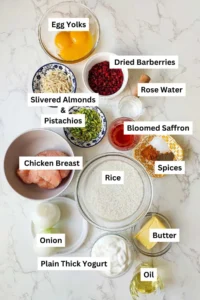
    Why is Fesenjoon Famous?

    Fesenjoon’s fame comes from its unique flavor profile and visual appeal. Unlike any Ghorme Sabzi, its combination of ground walnuts and pomegranate molasses creates a savory dish that’s both nutty and fruity. Its deep, mahogany color and velvety texture make it a centerpiece at Persian feasts. The dish is also often associated with celebration and family gatherings which is a big deal in Persian culture, adding a layer of nostalgia and significance.

    Ingredients

    Fesenjoon-Ingredients

    The classic ingredients for authentic Khoresht-e-Fesenjoon are:

    • Chicken pieces (alternatively, duck or meatballs)
    • Walnuts, finely ground (about 300g for 4 people)
    • Pomegranate molasses (about 1/2 to 1 cup, depending on your taste)
    • Onion, one large, finely chopped
    • Water (enough to cover the ingredients)
    • Salt and pepper, to taste
    • Turmeric (optional, for extra flavor)
    • Sugar (optional, to balance tartness)
    • Cooking oil (for sautéing)

    How to Cook Khoresht-e-Fesenjoon

    Fesenjan stew

    Step 1: Prepare the Walnuts

    • Grind the walnuts in a food processor until they become a fine, almost peanut-buttery paste.

    Step 2: Sauté the Onion and Chicken

    • In a large pot, heat some oil and sauté the chopped onion until golden.

    • Add the chicken pieces, salt, pepper, and a pinch of turmeric, and brown on all sides.
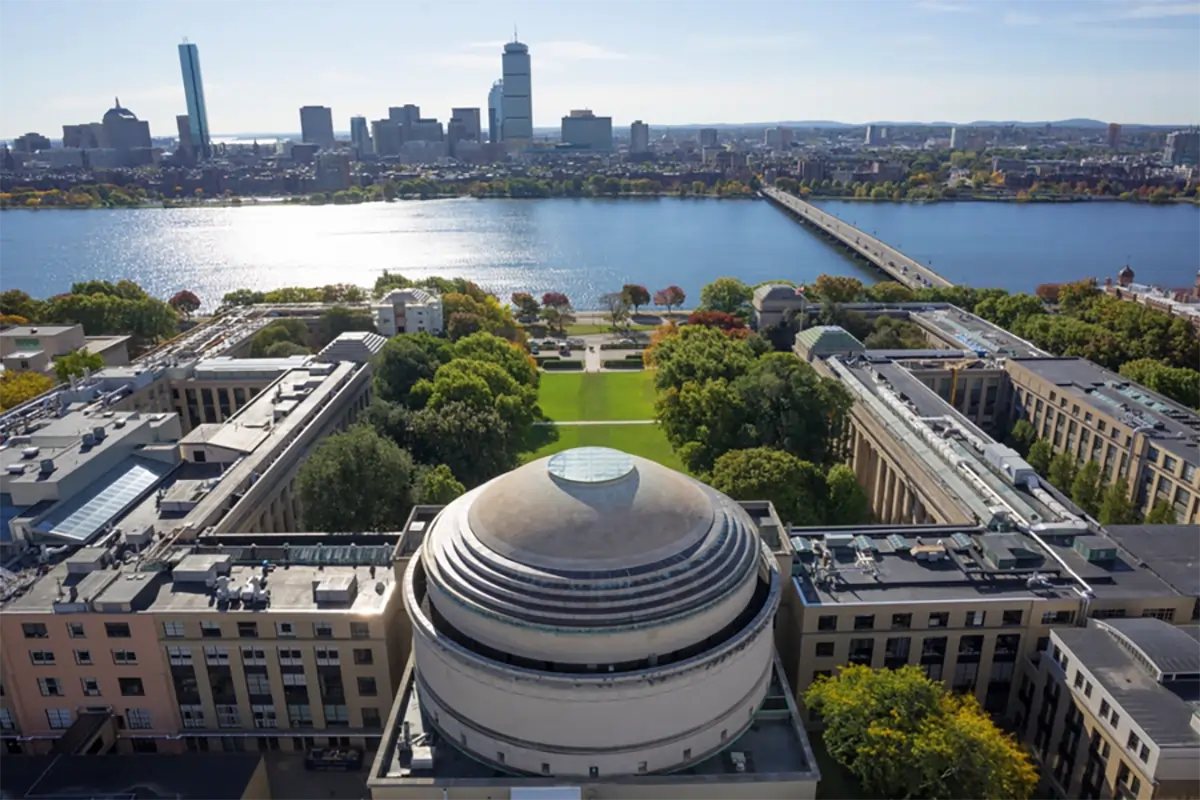
    Step 3: Add Walnuts

    • Add the ground walnuts to the pot. Stir continuously to prevent sticking and let the oil from the walnuts release.

    Step 4: Add Water and Simmer

    • Pour enough water to cover the ingredients. Bring to a gentle simmer. Cover and let it cook for about 1 hour, stirring occasionally.

    Step 5: Add Pomegranate Molasses

    • Add the pomegranate molasses gradually, tasting as you go. Simmer for another hour, allowing the stew to darken and thicken.

    Step 6: Adjust Flavor

    • Taste your Fesenjoon. If it’s too tart, add sugar to balance it. If too thick, thin with a little water; if too watery, continue simmering uncovered.

    Step 7: Serve

    • Once the oil from the walnuts appears on top and the stew is a deep brown, it’s ready to serve.

    Tips to Cook Fesenjoon

    • Quality Walnuts: Fresh, high-quality walnuts make all the difference.
    • Low and Slow: Simmer the stew slowly to develop flavor and achieve the right texture.
    • Taste as You Go: The tartness of pomegranate molasses can vary, so taste and adjust sweetness.
    • Resting Time: Fesenjoon tastes even better the next day after the flavors meld.

    What to Serve Beside Fesenjoon?

    Khoresh-e-Fesenjan

    Fesenjoon is traditionally served over Persian saffron rice (chelow). Popular sides include:

    • Sabzi khordan (fresh herbs)
    • Torshi (pickled vegetables)
    • Yogurt with cucumber or mint
    • Lavash or other Iranian breads

    Is Fesenjoon Healthy?

    Fesenjoon is relatively healthy, especially if made with minimal oil and chicken instead of fattier meats. Walnuts provide healthy fats and omega-3s, while pomegranate brings antioxidants. Be mindful of the sugar content if you’re watching your intake, and enjoy this dish as part of a balanced diet.

    In summary…

    Khoresht-e-Fesenjoon is a showstopper on any Persian table. Its blend of flavors, historical significance, and versatility make it a must-try for any home cook interested in world cuisine. Give this recipe a try and experience the taste of Iranian tradition!